Showing posts with label pregnancy. Show all posts
Wednesday, January 18, 2012
Home birth is safe, says new study!
I was very happy to log onto my favorite news source (uh-hem, Facebook) and find this article from USA Today that reads "Study: Home birth with midwife as safe as hospital birth" Glory Hallelujah! I couldn't be more excited to find a major U.S. news source stating what the home birth community already knows.
The study was done in Canada, where midwifery is a more open and more accepted practice than here in the U.S. They documented 13,000 births, about 1/3 were home births with a midwife, 1/3 hospital births with the same group of midwives, and the other 1/3 hospital births with an obstetrician and compared the data sets. They found that out of 1,000 live births, the infant mortality rate among the home birth group was .35, the hospital with a midwife group was .57, and the hospital group who birthed with an OB was .64. The statistics alone say that home birth is actually not as safe as hospital birth - it is SAFER! However, I will concede that they are not necessarily comparing apples to apples. What we need to know is how many of the hospital patients were low-risk births. Midwives will usually not attend home births for clients who have high-risk factors or who have breech babies or premature babies. Many home birthing mothers are overall healthier and pay more attention to diet pre and post conception, which may help have a positive outcome of birth. The article also states that women who birth at home need less medical intervention and have fewer complications like hemorrhage and vaginal tearing.
The article also states the problem with midwifery here in the U.S. is that many states do not regulate midwives. It says that the medical community sees home birth as unsafe because many "midwives" may not have the proper education or necessary credentials. However, there are about a dozen states in the nation where practicing midwifery is illegal, several states who do not license midwives, and several more states where midwives are totally unregulated. This is a complete double-standard where the public is warned that home birth is dangerous because midwifery is not regulated, while the states could choose to regulate and license midwives.
Articles like these bring home birth and midwifery to the public eye, and for that I am very grateful. The more home birth is seen as a safe and good option, the more pressure will be put on states, like my home state, to certify and legalized Certified Professional Midwives.
The picture is my wonderful midwife, checking out my newborn.
Monday, November 14, 2011
Why Have a Natural Birth?
1. Trust in God's Design
2. Often results in fewer complications
3. Less risk of harm to mother and baby
4. Labor is usually shorter
5. No loss in sensation or alertness
6. Allowing labor to start spontaneously results in fewer complications and there is a greater chance the baby will be fully developed and ready to live outside the womb.
7. Breastfeeding may be established easier
8. Recovery is usually quicker
9. Empowering
10. Sense of accomplishment
11. Because we can!
2. Often results in fewer complications
3. Less risk of harm to mother and baby
4. Labor is usually shorter
5. No loss in sensation or alertness
6. Allowing labor to start spontaneously results in fewer complications and there is a greater chance the baby will be fully developed and ready to live outside the womb.
7. Breastfeeding may be established easier
8. Recovery is usually quicker
9. Empowering
10. Sense of accomplishment
11. Because we can!
Thursday, September 22, 2011
Books I Love: Taking Charge of Your Fertility
Taking Charge of Your Fertility: The definitive guide to natural birth control, pregnancy achievement, and reproductive health.
Toni Weschler, MPH
This may be one of the best books I've ever read. No I'm not kidding. I read this book two years ago when I was just starting to think about trying to conceive. In the midst of being totally amazed at what I didn't know about my own body, I couldn't help but wonder - why didn't I know this before? This is not what kids are learning in sex ed. This is not what our mother's are teaching when we first get our periods. Why? Because they didn't know. The female body has remained a mystery for even females!
This book teaches how to learn your body's natural cues of fertility. It teaches that your cycle doesn't revolve around your period, but rather ovulation. It teaches how to know when you ovulate. The natural birth control taught here is the Fertility Awareness Method (FAM). FAM is 99% effective when followed properly. It is not the "rhythm method", but rather following your bodies cues to know when you are fertile. It absolutely puts you in charge of your fertility. You can decide when to try for pregnancy or when to avoid it. It is not just looking at a calendar and counting to 14 as your OBGYN might teach. It also can tell you when you have an issue in your cycle so you and your OBGYN can be more precise and effective. The FAM combines charting your basal body temperature with other fertility cues. You may be thinking "Ugh, not charting!" A lot of people find charting laborious or stressful because they tried it when trying to conceive. I'm not going to lie, it does take work and organization. If you have trouble remembering to chart, are too busy, or don't have the discipline, then this method is not for you. But I love spreadsheets and I love learning about myself, so no big deal!
I absolutely believe that hormonal birth control is destroying our fertility. It wreaks havoc on our bodies causing more than just some uncomfortable side effects or mood swings. I believe it can cause lasting damage to your cycle. No, I don't have science to back me up. All I have is experience, testimonials, and a fair bit of speculation. So many people are experiencing miscarriages. I believe some of these could be related to hormonal birth control. Progesterone is what carries a pregnancy. Pro-gestational-hormone. It is essential to maintain pregnancy. While on birth control you do not produce progesterone. Hormonal birth control shuts down your natural progesterone and replaces it with progestin, a synthetic progesterone derived from horses' urine. Because the body is not allowed to produce it's own progesterone, it often has a bit of trouble kicking it back up once off the pill. The body could then not produce enough causing crazy cycles, delayed ovulation, or loss of a fertilized egg. Your hormones are in charge of everything from sleep, to your mood, to fertility, and a hormone imbalance can cause insomnia, headaches, weight gain, allergies, arthritis, auto-immune disorders, fatigue, etc, etc, etc. Hormone balance is very fragile, and personally, I believe hormones are nothing to mess with.
So get the book and read everything you may not know about yourself. It is totally eye opening and fascinating. Also, Weschler, has a book for teens called "Cycle Savvy: The smart teen's guide to the mysteries of her body" that teaches young girls all about their cycle. If there isn't something newer by the time my daughter enters the great abyss of puberty, then I'm definitely getting that.
Toni Weschler, MPH
This may be one of the best books I've ever read. No I'm not kidding. I read this book two years ago when I was just starting to think about trying to conceive. In the midst of being totally amazed at what I didn't know about my own body, I couldn't help but wonder - why didn't I know this before? This is not what kids are learning in sex ed. This is not what our mother's are teaching when we first get our periods. Why? Because they didn't know. The female body has remained a mystery for even females!
This book teaches how to learn your body's natural cues of fertility. It teaches that your cycle doesn't revolve around your period, but rather ovulation. It teaches how to know when you ovulate. The natural birth control taught here is the Fertility Awareness Method (FAM). FAM is 99% effective when followed properly. It is not the "rhythm method", but rather following your bodies cues to know when you are fertile. It absolutely puts you in charge of your fertility. You can decide when to try for pregnancy or when to avoid it. It is not just looking at a calendar and counting to 14 as your OBGYN might teach. It also can tell you when you have an issue in your cycle so you and your OBGYN can be more precise and effective. The FAM combines charting your basal body temperature with other fertility cues. You may be thinking "Ugh, not charting!" A lot of people find charting laborious or stressful because they tried it when trying to conceive. I'm not going to lie, it does take work and organization. If you have trouble remembering to chart, are too busy, or don't have the discipline, then this method is not for you. But I love spreadsheets and I love learning about myself, so no big deal!
I absolutely believe that hormonal birth control is destroying our fertility. It wreaks havoc on our bodies causing more than just some uncomfortable side effects or mood swings. I believe it can cause lasting damage to your cycle. No, I don't have science to back me up. All I have is experience, testimonials, and a fair bit of speculation. So many people are experiencing miscarriages. I believe some of these could be related to hormonal birth control. Progesterone is what carries a pregnancy. Pro-gestational-hormone. It is essential to maintain pregnancy. While on birth control you do not produce progesterone. Hormonal birth control shuts down your natural progesterone and replaces it with progestin, a synthetic progesterone derived from horses' urine. Because the body is not allowed to produce it's own progesterone, it often has a bit of trouble kicking it back up once off the pill. The body could then not produce enough causing crazy cycles, delayed ovulation, or loss of a fertilized egg. Your hormones are in charge of everything from sleep, to your mood, to fertility, and a hormone imbalance can cause insomnia, headaches, weight gain, allergies, arthritis, auto-immune disorders, fatigue, etc, etc, etc. Hormone balance is very fragile, and personally, I believe hormones are nothing to mess with.
So get the book and read everything you may not know about yourself. It is totally eye opening and fascinating. Also, Weschler, has a book for teens called "Cycle Savvy: The smart teen's guide to the mysteries of her body" that teaches young girls all about their cycle. If there isn't something newer by the time my daughter enters the great abyss of puberty, then I'm definitely getting that.
Friday, August 26, 2011
Your Rights!
While writing this post, I've almost constantly been hearing a certain 1987 Beastie Boys song in my head. Hm, I didn't even listen to the Beastie Boys back in the day...
Anyway, while you may not fight for your right to party anymore, a birthing mother sometimes has to fight for her right to birth the way she chooses. Particularly, you may have to fight policy in a hospital setting.
I hear so many stories that start or end with "the doctor made me...". A doctor can not make you do anything. That is illegal. However, he or she can recommend something and it is up to you as an individual and a knowledgeable adult to accept or decline. Unless it is an emergency situation, you should never be pressured into anything without being able to think, research, and pray about a procedure beforehand. This statement is specifically about pregnancy and birth, but applies to all health care decisions. The decision truly is yours. Remember, you hired the doctor... he or she actually works for you!
I say this with The Rights of Childbearing Women in mind. The following is taken from www.childbirthconnection.org, a women's advocacy group since 1918. Some of these rights are fairly obvious to most of us, but some of them are not routinely honored in the hospital setting, or are not known by the mother. I'll point them out after the list...
The Rights of Childbearing Women
* At this time in the United States, childbearing women are legally entitled to those rights.
** The legal system would probably uphold those rights.
1. Every woman has the right to health care before, during and after pregnancy and childbirth.
2. Every woman and infant has the right to receive care that is consistent with current scientific evidence about benefits and risks.* Practices that have been found to be safe and beneficial should be used when indicated. Harmful, ineffective or unnecessary practices should be avoided. Unproven interventions should be used only in the context of research to evaluate their effects.
3. Every woman has the right to choose a midwife or a physician as her maternity care provider. Both caregivers skilled in normal childbearing and caregivers skilled in complications are needed to ensure quality care for all.
4. Every woman has the right to choose her birth setting from the full range of safe options available in her community, on the basis of complete, objective information about benefits, risks and costs of these options.*
5. Every woman has the right to receive all or most of her maternity care from a single caregiver or a small group of caregivers, with whom she can establish a relationship. Every woman has the right to leave her maternity caregiver and select another if she becomes dissatisfied with her care.* (Only second sentence is a legal right.)
6. Every woman has the right to information about the professional identity and qualifications of those involved with her care, and to know when those involved are trainees.*
7. Every woman has the right to communicate with caregivers and receive all care in privacy, which may involve excluding nonessential personnel. She also has the right to have all personal information treated according to standards of confidentiality.*
8. Every woman has the right to receive maternity care that identifies and addresses social and behavioral factors that affect her health and that of her baby.** She should receive information to help her take the best care of herself and her baby and have access to social services and behavioral change programs that could contribute to their health.
9. Every woman has the right to full and clear information about benefits, risks and costs of the procedures, drugs, tests and treatments offered to her, and of all other reasonable options, including no intervention.* She should receive this information about all interventions that are likely to be offered during labor and birth well before the onset of labor.
10. Every woman has the right to accept or refuse procedures, drugs, tests and treatments, and to have her choices honored. She has the right to change her mind.* (Please note that this established legal right has been challenged in a number of recent cases.)
11. Every woman has the right to be informed if her caregivers wish to enroll her or her infant in a research study. She should receive full information about all known and possible benefits and risks of participation; and she has the right to decide whether to participate, free from coercion and without negative consequences.*
12. Every woman has the right to unrestricted access to all available records about her pregnancy, labor, birth, postpartum care and infant; to obtain a full copy of these records; and to receive help in understanding them, if necessary.*
13. Every woman has the right to receive maternity care that is appropriate to her cultural and religious background, and to receive information in a language in which she can communicate.*
14. Every woman has the right to have family members and friends of her choice present during all aspects of her maternity care.**
15. Every woman has the right to receive continuous social, emotional and physical support during labor and birth from a caregiver who has been trained in labor support.**
16. Every woman has the right to receive full advance information about risks and benefits of all reasonably available methods for relieving pain during labor and birth, including methods that do not require the use of drugs. She has the right to choose which methods will be used and to change her mind at any time.*
17. Every woman has the right to freedom of movement during labor, unencumbered by tubes, wires or other apparatus. She also has the right to give birth in the position of her choice.*
18. Every woman has the right to virtually uninterrupted contact with her newborn from the moment of birth, as long as she and her baby are healthy and do not need care that requires separation.**
19. Every woman has the right to receive complete information about the benefits of breastfeeding well in advance of labor, to refuse supplemental bottles and other actions that interfere with breastfeeding, and to have access to skilled lactation support for as long as she chooses to breastfeed.**
20. Every woman has the right to decide collaboratively with caregivers when she and her baby will leave the birth site for home, based on their conditions and circumstances.**
#9 is not routinely practiced. If this information is not received well before the onset of labor, upon admittance to the hospital a stack of paperwork is handed to a woman, who is expected to sign and perhaps read while in the middle of her birthing time. Often the paperwork is hastily signed and no one knows what any of it said. It is a very good idea to ask for all paperwork at a prenatal appointment and to carefully go over everything, and edit, before signing. Also, many risks of interventions are not clearly stated before hand. Not only is it a good idea to get paperwork and ask questions before birth, but you must do your own research.
#10 is not routinely practiced. Many women believe that whatever their doctor prescribes, they have to have. They do not know that you can refuse tests and treatment not only during birth, but in prenatal exams. You may think that if your doctor recommends it then it must be best, but again, this is where personal research and decision making is imperative. A doctor will recommend treatments and interventions for a variety of reasons including routine, policy, or personal agenda, not necessarily because it is best for your baby as an individual.
#16 may not be routinely practiced, and women are receiving epidurals and other pain relieving drugs without being fully aware of the potential side effects and risks
#17 is not routinely practiced. Many women are told to get in bed even if they don't want to. Freedom of movement is a right and should be respected. Laboring and birthing flat on your back is just about the worse position and is only practiced for convenience of the caregivers.
#18 is so important. I believe skin-to-skin contact immediately after birth is vital and the baby should not be taken unless medical attention is needed. Many tests and exams of the newborn can be done while mom is holding baby.
#20 is pretty much an unknown, and most women wait on their doctor's permission to be released instead of being an active participant in the decision.
Be prepared to fight for your right. The best way to do this is to have a written birth plan. If your plan is read by all nurses and agreed upon by your doctor, there should be much less of a fight... To party, or otherwise...
Anyway, while you may not fight for your right to party anymore, a birthing mother sometimes has to fight for her right to birth the way she chooses. Particularly, you may have to fight policy in a hospital setting.
I hear so many stories that start or end with "the doctor made me...". A doctor can not make you do anything. That is illegal. However, he or she can recommend something and it is up to you as an individual and a knowledgeable adult to accept or decline. Unless it is an emergency situation, you should never be pressured into anything without being able to think, research, and pray about a procedure beforehand. This statement is specifically about pregnancy and birth, but applies to all health care decisions. The decision truly is yours. Remember, you hired the doctor... he or she actually works for you!
I say this with The Rights of Childbearing Women in mind. The following is taken from www.childbirthconnection.org, a women's advocacy group since 1918. Some of these rights are fairly obvious to most of us, but some of them are not routinely honored in the hospital setting, or are not known by the mother. I'll point them out after the list...
The Rights of Childbearing Women
* At this time in the United States, childbearing women are legally entitled to those rights.
** The legal system would probably uphold those rights.
1. Every woman has the right to health care before, during and after pregnancy and childbirth.
2. Every woman and infant has the right to receive care that is consistent with current scientific evidence about benefits and risks.* Practices that have been found to be safe and beneficial should be used when indicated. Harmful, ineffective or unnecessary practices should be avoided. Unproven interventions should be used only in the context of research to evaluate their effects.
3. Every woman has the right to choose a midwife or a physician as her maternity care provider. Both caregivers skilled in normal childbearing and caregivers skilled in complications are needed to ensure quality care for all.
4. Every woman has the right to choose her birth setting from the full range of safe options available in her community, on the basis of complete, objective information about benefits, risks and costs of these options.*
5. Every woman has the right to receive all or most of her maternity care from a single caregiver or a small group of caregivers, with whom she can establish a relationship. Every woman has the right to leave her maternity caregiver and select another if she becomes dissatisfied with her care.* (Only second sentence is a legal right.)
6. Every woman has the right to information about the professional identity and qualifications of those involved with her care, and to know when those involved are trainees.*
7. Every woman has the right to communicate with caregivers and receive all care in privacy, which may involve excluding nonessential personnel. She also has the right to have all personal information treated according to standards of confidentiality.*
8. Every woman has the right to receive maternity care that identifies and addresses social and behavioral factors that affect her health and that of her baby.** She should receive information to help her take the best care of herself and her baby and have access to social services and behavioral change programs that could contribute to their health.
9. Every woman has the right to full and clear information about benefits, risks and costs of the procedures, drugs, tests and treatments offered to her, and of all other reasonable options, including no intervention.* She should receive this information about all interventions that are likely to be offered during labor and birth well before the onset of labor.
10. Every woman has the right to accept or refuse procedures, drugs, tests and treatments, and to have her choices honored. She has the right to change her mind.* (Please note that this established legal right has been challenged in a number of recent cases.)
11. Every woman has the right to be informed if her caregivers wish to enroll her or her infant in a research study. She should receive full information about all known and possible benefits and risks of participation; and she has the right to decide whether to participate, free from coercion and without negative consequences.*
12. Every woman has the right to unrestricted access to all available records about her pregnancy, labor, birth, postpartum care and infant; to obtain a full copy of these records; and to receive help in understanding them, if necessary.*
13. Every woman has the right to receive maternity care that is appropriate to her cultural and religious background, and to receive information in a language in which she can communicate.*
14. Every woman has the right to have family members and friends of her choice present during all aspects of her maternity care.**
15. Every woman has the right to receive continuous social, emotional and physical support during labor and birth from a caregiver who has been trained in labor support.**
16. Every woman has the right to receive full advance information about risks and benefits of all reasonably available methods for relieving pain during labor and birth, including methods that do not require the use of drugs. She has the right to choose which methods will be used and to change her mind at any time.*
17. Every woman has the right to freedom of movement during labor, unencumbered by tubes, wires or other apparatus. She also has the right to give birth in the position of her choice.*
18. Every woman has the right to virtually uninterrupted contact with her newborn from the moment of birth, as long as she and her baby are healthy and do not need care that requires separation.**
19. Every woman has the right to receive complete information about the benefits of breastfeeding well in advance of labor, to refuse supplemental bottles and other actions that interfere with breastfeeding, and to have access to skilled lactation support for as long as she chooses to breastfeed.**
20. Every woman has the right to decide collaboratively with caregivers when she and her baby will leave the birth site for home, based on their conditions and circumstances.**
#9 is not routinely practiced. If this information is not received well before the onset of labor, upon admittance to the hospital a stack of paperwork is handed to a woman, who is expected to sign and perhaps read while in the middle of her birthing time. Often the paperwork is hastily signed and no one knows what any of it said. It is a very good idea to ask for all paperwork at a prenatal appointment and to carefully go over everything, and edit, before signing. Also, many risks of interventions are not clearly stated before hand. Not only is it a good idea to get paperwork and ask questions before birth, but you must do your own research.
#10 is not routinely practiced. Many women believe that whatever their doctor prescribes, they have to have. They do not know that you can refuse tests and treatment not only during birth, but in prenatal exams. You may think that if your doctor recommends it then it must be best, but again, this is where personal research and decision making is imperative. A doctor will recommend treatments and interventions for a variety of reasons including routine, policy, or personal agenda, not necessarily because it is best for your baby as an individual.
#16 may not be routinely practiced, and women are receiving epidurals and other pain relieving drugs without being fully aware of the potential side effects and risks
#17 is not routinely practiced. Many women are told to get in bed even if they don't want to. Freedom of movement is a right and should be respected. Laboring and birthing flat on your back is just about the worse position and is only practiced for convenience of the caregivers.
#18 is so important. I believe skin-to-skin contact immediately after birth is vital and the baby should not be taken unless medical attention is needed. Many tests and exams of the newborn can be done while mom is holding baby.
#20 is pretty much an unknown, and most women wait on their doctor's permission to be released instead of being an active participant in the decision.
Be prepared to fight for your right. The best way to do this is to have a written birth plan. If your plan is read by all nurses and agreed upon by your doctor, there should be much less of a fight... To party, or otherwise...
Wednesday, May 18, 2011
Love me some Cal-Mag!
The following is a rather boring yet very informative post on Calcium/Magnesium supplements. I thought it would be useful to review Cal/Mag and its benefits during pregnancy and beyond.
Calcium and Magnesium are two minerals that are vital to the body. Calcium is essential for bone and teeth health while every organ in the body needs magnesium, including the heart. Taking a cal-mag supplement as needed or regularly may be a good idea for some, and especially pregnant women.
Magnesium activates enzymes, contributes to energy production, and aids in absorption of calcium, zinc, and Vitamin D. Magnesium helps to maintain a normal heart rhythm, helps prevent type 2 diabetes, helps decrease high blood pressure in women, helps prevent osteoporosis, and can be a good pain reliever for headaches, migraines, menstrual cramps, and muscle cramps. Magnesium is found in green leafy vegetables as well as calcium, and in whole grains, nuts and seeds. Americans tend to not get enough magnesium through their diet. Some diseases can cause a magnesium deficiency, as well as drinking too much caffeine and alcohol.
Calcium is the most abundant mineral in the body. It is stored in the bones and helps the heart and nerves function properly. The best source for any vitamin or mineral is through food, but again, many Americans are not getting enough through their diet. Calcium can help prevent osteoporosis, lower blood pressure, and lower cholesterol. One large study by Bendich, 2009 showed that women who got 1,200 mg of calcium daily reduced PMS symptoms like headache, moodiness, cravings, and another study said that it reduced menstrual cramps.
As with magnesium, some diseases, such as Crohn's, can cause a calcium deficiency, as well as drinking too much caffeine and alcohol. A calcium deficiency causes Rickets, a disease found in children, which is one reason why pediatricians recommend children consume so much milk. However, children can get calcium from much healthier foods such as almonds, bok choy, Brazil nuts, broccoli, cabbage, dried figs, kelp, dark leafy greens (dandelion, turnip, collard, mustard, kale, Swiss chard), hazelnuts, blackstrap molasses, and canned salmon.
During Pregnancy
Taking a cal-mag supplement regularly ensures growth of strong bones and teeth of the baby, while potentially relieving some pregnancy related discomforts. Cal-mag can regulate sleep, help prevent restless leg syndrome, leg cramps, and joint discomfort. Calcium and Magnesium both can prevent or reduce the severity of preeclampsia (high blood pressure during pregnancy, which is a severe health threat for both mother and baby). Often, the first thing the hospital will do to treat or prevent complications caused by preeclampsia is to give magnesium intravenously.
Since magnesium regulates the absorption of calcium, it is best to take them together. I took a Cal-Mag supplement regularly while pregnant, and take it occasionally now for headaches (works great!) and muscle aches. It is also not a bad idea for nursing mothers, and post-menopausal women to take a Cal-Mag supplement for extra calcium.
Source: University of Maryland Medical Center
Calcium and Magnesium are two minerals that are vital to the body. Calcium is essential for bone and teeth health while every organ in the body needs magnesium, including the heart. Taking a cal-mag supplement as needed or regularly may be a good idea for some, and especially pregnant women.
Magnesium activates enzymes, contributes to energy production, and aids in absorption of calcium, zinc, and Vitamin D. Magnesium helps to maintain a normal heart rhythm, helps prevent type 2 diabetes, helps decrease high blood pressure in women, helps prevent osteoporosis, and can be a good pain reliever for headaches, migraines, menstrual cramps, and muscle cramps. Magnesium is found in green leafy vegetables as well as calcium, and in whole grains, nuts and seeds. Americans tend to not get enough magnesium through their diet. Some diseases can cause a magnesium deficiency, as well as drinking too much caffeine and alcohol.
Calcium is the most abundant mineral in the body. It is stored in the bones and helps the heart and nerves function properly. The best source for any vitamin or mineral is through food, but again, many Americans are not getting enough through their diet. Calcium can help prevent osteoporosis, lower blood pressure, and lower cholesterol. One large study by Bendich, 2009 showed that women who got 1,200 mg of calcium daily reduced PMS symptoms like headache, moodiness, cravings, and another study said that it reduced menstrual cramps.
As with magnesium, some diseases, such as Crohn's, can cause a calcium deficiency, as well as drinking too much caffeine and alcohol. A calcium deficiency causes Rickets, a disease found in children, which is one reason why pediatricians recommend children consume so much milk. However, children can get calcium from much healthier foods such as almonds, bok choy, Brazil nuts, broccoli, cabbage, dried figs, kelp, dark leafy greens (dandelion, turnip, collard, mustard, kale, Swiss chard), hazelnuts, blackstrap molasses, and canned salmon.
During Pregnancy
Taking a cal-mag supplement regularly ensures growth of strong bones and teeth of the baby, while potentially relieving some pregnancy related discomforts. Cal-mag can regulate sleep, help prevent restless leg syndrome, leg cramps, and joint discomfort. Calcium and Magnesium both can prevent or reduce the severity of preeclampsia (high blood pressure during pregnancy, which is a severe health threat for both mother and baby). Often, the first thing the hospital will do to treat or prevent complications caused by preeclampsia is to give magnesium intravenously.
Since magnesium regulates the absorption of calcium, it is best to take them together. I took a Cal-Mag supplement regularly while pregnant, and take it occasionally now for headaches (works great!) and muscle aches. It is also not a bad idea for nursing mothers, and post-menopausal women to take a Cal-Mag supplement for extra calcium.
Source: University of Maryland Medical Center
Monday, March 28, 2011
Thursday, November 11, 2010
Time for a Change
Did you know that the United States has the second worse newborn death rate in the developed world and one of the worst maternal death rates in all industrialized countries? How could that be with all our technological advances and medical interventions? Or, is that exactly the problem?
Please read this interesting article about Birth in the U.S. And if you are real ambitious, this article by Amnesty International about the maternal health care crisis in the U.S.
If you haven't read my birth story, a "different" perspective of how great birth can be, please feel free to do so.
Please read this interesting article about Birth in the U.S. And if you are real ambitious, this article by Amnesty International about the maternal health care crisis in the U.S.
If you haven't read my birth story, a "different" perspective of how great birth can be, please feel free to do so.
Wednesday, July 28, 2010
Optimal Fetal Positioning - Part 3
I've decided for part three not to discuss turning a baby; I'll leave that up to spinningbabies.com . There is loads and loads of information on that website of ensuring a good positioned baby throughout your pregnancy, and then a lot of techniques on turning babies during labor. So its a good website to familiarize yourself with.
What I do want to discuss is some materials I have found in my home study course for what you can do every day to encourage a baby to be in good birthing position. Most are posture related.
Getting baby in a good position
In previous OFP posts, I talked about how babies just want to be comfortable and gravity generally governs how they are positioned in the womb. The shape of the uterus, pelvis, and gravity are the things that will affect a babies position the most. We can't do a darn thing about the shape of our bodies, but we can do something about gravity.
A baby generally ends up head down because it fits snugly in the uterus and because it is the heaviest part of the baby, thus turning down with gravity. The same goes with a baby's back. They end up anterior (back towards your stomach) because of the same factors. However, it is much easier to affect whether a baby sits anterior or posterior by the way you sit and by your posture. The heaviest part of a baby is the head, but the second heaviest part is the back. Their back is going to want to turn whichever way gravity points. Think about this for a second. If you spend a lot of time reclining back, where will the baby's back want to lie? Down. It will want to turn down, which would be turning posterior. Remembering gravity, the best way to get a baby anterior or keep a baby anterior is to get gravity to turn the baby towards yours stomach. This basically means being uncomfortable at all times!
These are the suggestions in my study course:
-Sit tilted forward. - imagine your uterus as a hammock for the baby.
-Keep your knees below your pelivs. This definitely means not lying back with your feet up in the air. Many doctors and midwives have prescribed lying just like this to help with swelling, but I disagree. It would encourage the baby to turn posterior. Laying on your side with your feet up is a much better option.
-Don't cross your legs! This closes the pelvis in the front and opens it in the back, which is not at all what you want.
-Lie on your left side mostly to keep baby on left side. I find it interesting that every pregnant woman in the world has been told to lie on their left side because of the artery that runs to the lower body. I think baby positioning is just as, or even more important for why we should lie on the left side and NOT on our backs!
-Plenty of pelvic tilts. - This is basically cat/cow, getting on hands and knees and tilting your pelvis forward, only not worrying so much about the cow part, and making sure to tip the pelvis in, not necessarily arch the back up. Pelvic tilts are an excellent pregnancy exercise. It is pretty much the only way to strengthen the abs, it relieves back discomfort, and the tilting action gets the baby to tuck their chin.
-Tailor pose. This is sitting on the floor with knees open and the soles of your feet together. This opens the pelvis and encourages space for the baby.
-Sitting on a yoga ball - This also opens the pelvis and helps the baby engage.
-Sitting on a dinning room chair, backwards - opens the pelvis and tilts the uterus forward.
Basically, we can't sit lady-like or recline. When I relax at home, I just lie on my left side on the couch. At work, I either sit on a ball at my desk, or I set my desk chair to not lean back at all. My book says to be concerned with your posture 6 weeks from due date. It also says that you can't just have good posture whenever you think of it, it has to be a conscious continuous effort.
I believe this concludes my Optimal Fetal Positioning series. I know that there are no guarantees. You could have perfect posture and end up with a malpositioned baby, or you could lie on your back with your feet up all day and have a perfectly positioned baby. There are a lot of factors that go into it. But like most things I have learned, I'd rather prepare and do all I can for a smooth delivery.
What I do want to discuss is some materials I have found in my home study course for what you can do every day to encourage a baby to be in good birthing position. Most are posture related.
Getting baby in a good position
In previous OFP posts, I talked about how babies just want to be comfortable and gravity generally governs how they are positioned in the womb. The shape of the uterus, pelvis, and gravity are the things that will affect a babies position the most. We can't do a darn thing about the shape of our bodies, but we can do something about gravity.
A baby generally ends up head down because it fits snugly in the uterus and because it is the heaviest part of the baby, thus turning down with gravity. The same goes with a baby's back. They end up anterior (back towards your stomach) because of the same factors. However, it is much easier to affect whether a baby sits anterior or posterior by the way you sit and by your posture. The heaviest part of a baby is the head, but the second heaviest part is the back. Their back is going to want to turn whichever way gravity points. Think about this for a second. If you spend a lot of time reclining back, where will the baby's back want to lie? Down. It will want to turn down, which would be turning posterior. Remembering gravity, the best way to get a baby anterior or keep a baby anterior is to get gravity to turn the baby towards yours stomach. This basically means being uncomfortable at all times!
These are the suggestions in my study course:
-Sit tilted forward. - imagine your uterus as a hammock for the baby.
-Keep your knees below your pelivs. This definitely means not lying back with your feet up in the air. Many doctors and midwives have prescribed lying just like this to help with swelling, but I disagree. It would encourage the baby to turn posterior. Laying on your side with your feet up is a much better option.
-Don't cross your legs! This closes the pelvis in the front and opens it in the back, which is not at all what you want.
-Lie on your left side mostly to keep baby on left side. I find it interesting that every pregnant woman in the world has been told to lie on their left side because of the artery that runs to the lower body. I think baby positioning is just as, or even more important for why we should lie on the left side and NOT on our backs!
-Plenty of pelvic tilts. - This is basically cat/cow, getting on hands and knees and tilting your pelvis forward, only not worrying so much about the cow part, and making sure to tip the pelvis in, not necessarily arch the back up. Pelvic tilts are an excellent pregnancy exercise. It is pretty much the only way to strengthen the abs, it relieves back discomfort, and the tilting action gets the baby to tuck their chin.
-Tailor pose. This is sitting on the floor with knees open and the soles of your feet together. This opens the pelvis and encourages space for the baby.
-Sitting on a yoga ball - This also opens the pelvis and helps the baby engage.
-Sitting on a dinning room chair, backwards - opens the pelvis and tilts the uterus forward.
Basically, we can't sit lady-like or recline. When I relax at home, I just lie on my left side on the couch. At work, I either sit on a ball at my desk, or I set my desk chair to not lean back at all. My book says to be concerned with your posture 6 weeks from due date. It also says that you can't just have good posture whenever you think of it, it has to be a conscious continuous effort.
I believe this concludes my Optimal Fetal Positioning series. I know that there are no guarantees. You could have perfect posture and end up with a malpositioned baby, or you could lie on your back with your feet up all day and have a perfectly positioned baby. There are a lot of factors that go into it. But like most things I have learned, I'd rather prepare and do all I can for a smooth delivery.
Monday, July 26, 2010
37 Weeks
I am technically full term!
Although, I have a feeling we have several more weeks before we get to meet our baby. We were SURE the baby had dropped last week. I had tons of room up top, and my chiropractor said she couldn't feel the head at all. She was sure the baby had dropped too, and got me all excited. Well, at my prenatal on Friday, the baby was all the way up in my ribs. So high that the midwife assistant says "Geez! This baby is so high!" I was like "huh?" because last I heard the baby was "so low"! I asked if they can scoot up and down, but they thought it was more likely the baby was on the move and might have been posterior when the chiropractor felt around. I'm not so convinced.. I swear the baby was low!
Everything looks good. I am measuring about three weeks behind, so we think we'll have a small baby. Mary Anne says that is perfectly fine because I'm not that large myself. Plus, those measurements have a +/- 2 cm curve. I can feel a small baby though. He/She feels so very bony. The other day I could even feel tiny shoulders!
I am having lots of Braxton-Hicks. I've had them for weeks, but I suppose they are getting stronger and I have them more often. I don't have anything to compare them to, but they feel quite strong, to me. I'm excited about that, because I think that means they are efficient and doing their job!
My hip and pelvic pain has actually gotten quite a bit better. I have almost completely stopped exercising. (Which, I do not condone, btw!) The Friday before last I slipped in the gym bathroom after I got out of the pool and I aggravated my hurt pelvis so much that I felt like I had been injured the next day. Like literally hit by a car. I didn't exercise again until last Thursday, which was almost two weeks later. I went swimming, and even that hurt. But since Friday, my pelvis has felt better than it has in months. So, I'm just going to take it easy.
Other than that, I was sleeping ok, until just recently. I'm waking up around 4am and not being able to go back to sleep. That's the worst. Probably worse than pelvic pain because no sleep makes you feel yucky EVERYWHERE!
At any rate, we are preparing for the arrival of our new one. Which involved steam cleaning the carpets (twice), stocking the pantry, and organizing everything we'll need at home and to take to the birth. I think we'll be ready! (As long as its not tonight.. I don't think we're that ready!)
Thursday, July 15, 2010
Optimal Fetal Positioning - Part 2
Part 2, of OFP is what I have learned of how to discover your baby's position. It can only be successfully done the last two months of pregnancy.
Vertex or Breech?
An overwhelming majority of babies end up vertex (head down) with no effort from the mother. Babies are just tiny people who just want to be comfortable. Head down happens to be the most comfortable position because of the shape of the uterus and the shape of the pelvis. Their little heads fit perfectly in the low uterus and pelvis. Also - Gravity! The head is the heaviest part of a baby and therefore tips down.
Fortunately, you do not need an ultrasound to learn if your baby is head down! I have discovered four ways to tell that my baby is vertex. First, my midwife and my chiropractor can feel my baby's head just above my pubic bone. I actually can not feel this, and Patrick is too afraid he'd poke an eye out, that he hasn't felt for the head, but I know both of my care providers can identify a head within 2 seconds of feeling. This is sure to be the head because a butt is not going to fit nice and compact just above the pubic bone.
Secondly, you can easily find your baby's bottom by feeling around the upper part of your uterus. I can almost always identify the butt by giving a good feel on either the upper left or upper right side of my uterus. You can tell if this round body part is the head or butt by giving it a push. If you push on this lump, and you can feel the entire baby move (I often feel a push on my bladder, or pressure down low from pushing the baby) then its a butt. If you push on a bottom, the whole baby will move, if you push on a head, the head will just loll back and not move the whole body.
Third, I can identify my baby is vertex, and left lying by where I feel kicks. Kicks are much firmer and stronger than hands, which wiggle. I feel all kicks either in my right ribs or just below my right ribs. I think my baby is small, though, so a larger baby's feet might be wrapping around and you will feel kicks lower and further to the side of your body.
And finally, where the heartbeat was heard last will tell you the position of the baby. Mary Anne can find the heartbeat low on my abdomen on the left side. This shows a vertex, left lying baby.
Left or Right lying baby? Give a Feel.I can most always figure out what position my baby is in while feeling my belly while lying on my back. Lying flat on a bed or the floor, put your right hand flat against the right side of your stomach (so your palm will be against the side of your belly) and push on the left side with your left hand. With the hand that is pushing - do you feel a lot of resistance? Does it feel rather soft? Now switch, put left hand on left side and push with right hand. You should be able to tell which side has less "give". You can most likely determine what side the baby is, this way. You can also often feel the back of your baby when you are doing this.
Another way is where the heartbeat is heard, as mentioned above.
Anterior or Posterior
Now that you've discovered if your baby is vertex, and which side of your body she is lying, you can find if she is anterior or posterior. If you clearly felt the back with the method above, then she is most likely anterior. If you think about how a posterior baby is positioned, you can visualize that her back will be toward your back and so you may not be able to feel her back so well. Also, where you feel kicks and wiggles is a good indication. If you feel a lot of kicking and punching out towards the front of your belly, or can see feet pushing out like popcorn towards the front of your belly, she may be lying posterior.
I think its easier to tell when the baby is NOT posterior as opposed to when the baby IS posterior. If you can clearly feel a back, and can feel kicks in or under your ribs, or if you feel kicks way out to the side of your body, then the baby is more than likely anterior.
If you need a visualization, hold a stuffed bear or baby doll upside down against your belly as if it were your baby in utero. Head down, bottom to one side, feet to the other side rotate the bear posterior or anterior and see where the feet go. So when you feel kicks you can think about the stuffed bear and determine the baby's position.
www.spinningbabies.com/baby-positions/belly-mapping
Vertex or Breech?
An overwhelming majority of babies end up vertex (head down) with no effort from the mother. Babies are just tiny people who just want to be comfortable. Head down happens to be the most comfortable position because of the shape of the uterus and the shape of the pelvis. Their little heads fit perfectly in the low uterus and pelvis. Also - Gravity! The head is the heaviest part of a baby and therefore tips down.
Fortunately, you do not need an ultrasound to learn if your baby is head down! I have discovered four ways to tell that my baby is vertex. First, my midwife and my chiropractor can feel my baby's head just above my pubic bone. I actually can not feel this, and Patrick is too afraid he'd poke an eye out, that he hasn't felt for the head, but I know both of my care providers can identify a head within 2 seconds of feeling. This is sure to be the head because a butt is not going to fit nice and compact just above the pubic bone.
Secondly, you can easily find your baby's bottom by feeling around the upper part of your uterus. I can almost always identify the butt by giving a good feel on either the upper left or upper right side of my uterus. You can tell if this round body part is the head or butt by giving it a push. If you push on this lump, and you can feel the entire baby move (I often feel a push on my bladder, or pressure down low from pushing the baby) then its a butt. If you push on a bottom, the whole baby will move, if you push on a head, the head will just loll back and not move the whole body.
Third, I can identify my baby is vertex, and left lying by where I feel kicks. Kicks are much firmer and stronger than hands, which wiggle. I feel all kicks either in my right ribs or just below my right ribs. I think my baby is small, though, so a larger baby's feet might be wrapping around and you will feel kicks lower and further to the side of your body.
And finally, where the heartbeat was heard last will tell you the position of the baby. Mary Anne can find the heartbeat low on my abdomen on the left side. This shows a vertex, left lying baby.
Left or Right lying baby? Give a Feel.I can most always figure out what position my baby is in while feeling my belly while lying on my back. Lying flat on a bed or the floor, put your right hand flat against the right side of your stomach (so your palm will be against the side of your belly) and push on the left side with your left hand. With the hand that is pushing - do you feel a lot of resistance? Does it feel rather soft? Now switch, put left hand on left side and push with right hand. You should be able to tell which side has less "give". You can most likely determine what side the baby is, this way. You can also often feel the back of your baby when you are doing this.
Another way is where the heartbeat is heard, as mentioned above.
Anterior or Posterior
Now that you've discovered if your baby is vertex, and which side of your body she is lying, you can find if she is anterior or posterior. If you clearly felt the back with the method above, then she is most likely anterior. If you think about how a posterior baby is positioned, you can visualize that her back will be toward your back and so you may not be able to feel her back so well. Also, where you feel kicks and wiggles is a good indication. If you feel a lot of kicking and punching out towards the front of your belly, or can see feet pushing out like popcorn towards the front of your belly, she may be lying posterior.
I think its easier to tell when the baby is NOT posterior as opposed to when the baby IS posterior. If you can clearly feel a back, and can feel kicks in or under your ribs, or if you feel kicks way out to the side of your body, then the baby is more than likely anterior.
If you need a visualization, hold a stuffed bear or baby doll upside down against your belly as if it were your baby in utero. Head down, bottom to one side, feet to the other side rotate the bear posterior or anterior and see where the feet go. So when you feel kicks you can think about the stuffed bear and determine the baby's position.
www.spinningbabies.com/baby-positions/belly-mapping
Sunday, July 11, 2010
Book Review - The Birth Partner
The Birth Partner: A Complete Guide to Childbirth for Dads, Doulas, and Other Labor Companions by Penny Simkin
I did not read this book since I'm not the birth partner- Patrick did! So he's going to provide the book review....
Hello everyone! After some encouragement from Courtney, we borrowed The Birth Partner from the local library. As the birth partner, I am called to be the major support system for my wife, a role I cherish and hope to fulfill to the best of my ability. With help from The Birth Partner I am better prepared to actively take part in our baby's birth.
This book is extremely detailed and has given me a great deal of insight into what I must do as the husband and father. For instance, when mom is beginning her pre-birthing waves (contractions), it is imperative to keep track of pressure wave frequency and length. As the pre-birthing waves continue and become more frequent, if the birth partner has done his job, you can avoid an unnecessarily early trip to the birthing center. Depending on your situation (hospital, birthing center, home birth), timing can be extremely important. If you arrive too early, mom can become discouraged by what would appear as a lack of progression, when in fact it's just not the right time. As time goes on, things can get stressful, and unwanted interventions could begin. On the other hand, if the birth partner (that's me) has diligently monitored mom's pressure waves and follows the suggestions listed in The Birth Partner, we can avoid a potentially stressful situation. This will lead to a happy, low-anxiety birthing time. And mom, dad, and baby can meet each other in a comforting welcoming environment.
The Birth Partner starts with your role during pregnancy. This importance of making sure mom gets the calories, protein, and water her changing body needs. From there, you enter your role during pre-birthing waves. This section includes information about comfort and how you can help mom during this important time. It breaks down what she might be feeling, what you might be feeling, what you must do to make sure mom is as comfortable as possible, and what your doula does, if you've hired one. The doula sections were very helpful, because it gives the birth partner information on how an experienced doula would handle any point during the birthing time. Next up, birthing time. The Birth Partner outlines what you need to do as the husband in all situations. This information is invaluable, because you will be the one who needs to field any questions and handle any situations, because mom is a little busy... Finally, the books tells you what to do once the baby arrives and how to handle the first few hours and days, including infant care and breastfeeding.
If you're getting close to your birthing time and you want to make sure you're prepared as best you can be, I recommend reading this book. It's an easy and informative read, with a lot of useful resources you can keep on hand when the birthing time begins. I was out running with a friend the other day, and he told me when it comes to your birthing time and being a parent, you can pretty much throw the books out the window. That may be true, but I believe you don't want to go into a test without having studied before hand. Plus, the book gives tools of what to do during unexpected circumstances. This isn't just an idealized to-do list, but better prepares the birth partner to handle all types of situations, hopefully keeping the "oh crap" moments to a minimum. I now have knowledge of labor and normal progression, so I won't be just an ornament in the room, but a true helper. So, dads, read this book, be prepared, love on your wife, and enjoy a glorious and exciting birthing. It will only be the beginning of the most life-changing, important experience of your lives.
Wednesday, July 7, 2010
Optimal Fetal Positioning - Part 1
There are good positions and there are not so good positions. A smooth labor and delivery depends highly on the baby being in a good position. A pregnant woman can affect and change the position of her baby with normal everyday posture and few simple daily exercises. This is really something to pay attention to, as I know I want the best birthing I can possibly have.
I think I'll write this in a three part series, considering there is so much information on the subject. In part one, I'll go over the different positions, which is best and why. Part two will address how to figure out what position your baby is in (you don't need an ultrasound to tell you!), and Part three will be how baby gets to the proper position in the first place, what YOU do everyday to affect baby's position, and how to move your baby, if need be.
But first, my disclaimer: I'm just a normal person with a desire to have the best birth possible. The information I want to share is based on my research, largely found at www.spinningbabies.com.
Part 1 - What is Optimal Fetal Positioning (OFP)?
The best fetal position for birthing is Left Occiput Anterior (LOA), or Left Occiput Transverse (LOT). This basically means that the baby is on the mother's left side, head down, and is either facing the mother's back or facing the mother's hip. Having an LOA baby allows for an easier birthing than other positions because the baby's head is usually tucked to fit easier through the pelvis and birth canal, the baby's back curves most effectively in this position, allowing the baby to slide down easily, and LOA makes engagement (settling deep into the pelvis) likely, which is what starts labor. The difference between an LOA and an ROA (Right Occiput Anterior) baby is that the uterus naturally tilts to the right, and a baby sitting ROA is more likely to go posterior due to gravity. So, a baby who is on the right needs to turn 180 degrees to get into birthing position, while a baby on the left only has to turn 90 degrees. Turning the 90 degrees from the left side is much more easily done, working with contractions, gravity, and the shape of the uterus and pelvis.
Left Occiput Posterior (LOP) or Right Occiput Posterior (ROP) means that the baby is sitting on the mother's left or right side, with his back to your back. LOP or ROP babies have a hard time engaging in the pelvis because their chin usually does not tuck (because of the shape of the uterus), thus not presenting the smallest part of the head first. This prevents the baby from dropping and engaging the cervix, which could delay spontaneous labor. Baby's back against the mom's back also causes back labor as the baby is not "pointing" in the right direction and all the force of the contractions are going into the mom's back.
We all know what breech means - the baby's head is up. Although, in modern days, this is an automatic C-section, an experienced midwife could deliver a breech baby. Although difficult, there are ways to turn a breech, which will be Part 3.
There is also transverse, which means the baby is laying horizontal. I don't think that even needs an explanation of why that is bad news!

A pregnant woman should really start being concerned with OFP six weeks before the due date. Before this time, the baby is still flipping and swimming around. After this time, the baby does not need to be totally still, but should spend a good majority of its time in the correct position. The bigger the baby becomes, the harder it will be to move, so being in the correct position about a month out from birth makes things easier.
There is an entire book on optimal fetal positioning, how to ensure your baby is in the correct position, and how to move your baby. I have not read it, but I heard it is really great. It is Sit Up and Take Notice by Pauline Scott.
I'll now start working on how to know your baby's position. Stay tuned for Part 2!
I think I'll write this in a three part series, considering there is so much information on the subject. In part one, I'll go over the different positions, which is best and why. Part two will address how to figure out what position your baby is in (you don't need an ultrasound to tell you!), and Part three will be how baby gets to the proper position in the first place, what YOU do everyday to affect baby's position, and how to move your baby, if need be.
But first, my disclaimer: I'm just a normal person with a desire to have the best birth possible. The information I want to share is based on my research, largely found at www.spinningbabies.com.
Part 1 - What is Optimal Fetal Positioning (OFP)?
The best fetal position for birthing is Left Occiput Anterior (LOA), or Left Occiput Transverse (LOT). This basically means that the baby is on the mother's left side, head down, and is either facing the mother's back or facing the mother's hip. Having an LOA baby allows for an easier birthing than other positions because the baby's head is usually tucked to fit easier through the pelvis and birth canal, the baby's back curves most effectively in this position, allowing the baby to slide down easily, and LOA makes engagement (settling deep into the pelvis) likely, which is what starts labor. The difference between an LOA and an ROA (Right Occiput Anterior) baby is that the uterus naturally tilts to the right, and a baby sitting ROA is more likely to go posterior due to gravity. So, a baby who is on the right needs to turn 180 degrees to get into birthing position, while a baby on the left only has to turn 90 degrees. Turning the 90 degrees from the left side is much more easily done, working with contractions, gravity, and the shape of the uterus and pelvis.
Left Occiput Posterior (LOP) or Right Occiput Posterior (ROP) means that the baby is sitting on the mother's left or right side, with his back to your back. LOP or ROP babies have a hard time engaging in the pelvis because their chin usually does not tuck (because of the shape of the uterus), thus not presenting the smallest part of the head first. This prevents the baby from dropping and engaging the cervix, which could delay spontaneous labor. Baby's back against the mom's back also causes back labor as the baby is not "pointing" in the right direction and all the force of the contractions are going into the mom's back.
We all know what breech means - the baby's head is up. Although, in modern days, this is an automatic C-section, an experienced midwife could deliver a breech baby. Although difficult, there are ways to turn a breech, which will be Part 3.
There is also transverse, which means the baby is laying horizontal. I don't think that even needs an explanation of why that is bad news!

A pregnant woman should really start being concerned with OFP six weeks before the due date. Before this time, the baby is still flipping and swimming around. After this time, the baby does not need to be totally still, but should spend a good majority of its time in the correct position. The bigger the baby becomes, the harder it will be to move, so being in the correct position about a month out from birth makes things easier.
There is an entire book on optimal fetal positioning, how to ensure your baby is in the correct position, and how to move your baby. I have not read it, but I heard it is really great. It is Sit Up and Take Notice by Pauline Scott.
I'll now start working on how to know your baby's position. Stay tuned for Part 2!
Thursday, July 1, 2010
Books I Love: Ina May's Guide to Childbirth
by Ina May Gaskin
I read this book many months ago, and have actually been stalling writing the review. Only because this book has to be the single most important book on childbirth out today. I just don't think I can adequately review the book, or convince you enough to read it!
Ina May Gaskin is the nation's leading midwife, and the woman who basically brought midwifery back to America after several decades of hospitals having the monopoly on childbirth. She has almost 40 years of real hands-on childbirth experience and she shares her vast knowledge in Ina May's Guide to Childbirth.
The first half of the book is all birth stories. Ina May stresses that in a country filled with dramatic childbirth stories (after all, a nice, calm birth does not make for good drama television) American women rarely hear positive birth stories. Half the book is filled with real women and real stories of all types, meant to be inspirational. They certainly are! However, this is not what makes the book so fantastic. The second part is the "must read" in my opinion.
The second half of Ina May's book is the actual how-to for a natural birth. She doesn't spend her time trying to convince the reader to have a natural birth, she simply tells you how to have a natural birth. One thing I particularly liked about this book is the intensive research she did. A good majority of her guide is from personal experience, but each chapter is thoroughly researched in both the medical and midwifery community. She has a list of references at the end of each chapter that range from medical books from the 1800's to current articles from the American College of Gynecology and Obstetrics. She provides and in-depth look at childbirth and how the body actually gives birth, not just in today's medical mind, but dating back to the earliest birth accounts she can find.
Ina May explains how the body works, what actually happens in the body during birth, and how to work with your body to have a more efficient birth. One of my favorite chapters is actually an explanation of how the cervix functions; how it dilates and what you can do to promote its progress. I found this to be extremely informational, and look forward to practicing the practical ways of helping the cervix to open during birth. She provides a chapter on modern medicine and how each of these interventions may prevent a normal birth from progressing normally. She provides birthing positions that have been used effectively throughout the world and throughout the generations, with an explanation of why the positions work much better than the flat on your back, knees to your ears position.
Reading this book will not only prepare you for your birth, but will present information that you will carry with you for the rest of your life. Many, many other books and resources quote Ina May - so go straight to the source! You will end the book feeling accomplished already!
I first got this book from the library, then quickly ordered it so I would have my own copy. I plan to re-read it in the next several weeks to refresh my mind on her various techniques to open, relax, and work with my body. I can not stress enough how much every single woman of childbearing age should read this book. You can probably get it from your library, but I promise you'll want to buy it!
Friday, June 25, 2010
33 Weeks
33 weeks! Where has the time gone? We found out we were pregnant Thanksgiving weekend. If I think about how long ago Thanksgiving was, it feels like forever. If I think about how long 33 weeks is.. it seems like I couldn't possibly have been pregnant that long. I've never done anything for 33 weeks before!
I would say that so far my pregnancy has been fabulous. I have my fair share of complaints and discomforts, but none of that matters when I think of the fact that I'm growing an entire person. I'm still baffled that an entire person can be grown in 40 weeks. I think its going to take my tomato plant longer than that to grow one tomato!
My short list of complaints includes my pelvic pain (aka crotch pain), that has gotten worse as the baby has gotten larger. If I didn't have that, I think I would be the most comfortable pregnant woman in all the world. I had major sleep problems, but praise Jesus, I have been sleeping well this week. I hope that continues. Lack of sleep makes a person feel bad everywhere. I have also started to get a bit woozy in the mornings again. I have not figured out why yet. It comes about an hour after I awake, which corresponds to when I walk in the door at work, and lasts till about 11am.
Other than that, I have had absolutely no heartburn thanks to my wonderful papaya enzyme I take with breakfast and dinner. (It also keeps gas at bay, I haven't had the slightest issue with gas since I started taking it in February). I have never had an issue with contipation, and I have virtually no swelling, though some days my calves feel really tight. I don't have any cravings at all, and generally eat like I did before I was pregnant. Although - my watermelon obsession is a borderline craving. Its so sweet, juicy, and delicious; I ate two watermelons since last Thursday. Patrick did help - so I ate maybe 1.25 watermelons since last Thursday. We got another one last night but its BAD! So dissapointing!! but I digress. Blood pressure is good, hemoglobin is good, baby's heart rate is precious. Everything is going well!
At home, things are moving along and we are almost ready for the little one. Patrick finished all our furniture this past week (yay!). We had bought a used solid oak furniture set for our bedroom that he refinished dark mahogany, and he painted two old dressers that I had since I was probably a baby. We just moved those into the baby room and now we're trying to get organized. Once we do that, we'll have the nursery ready! I'll post pics!
Patrick can't hardly wait until August; I'm still adjusting to the idea of parenthood. I guess we only have about one full month before we are on "stand-by". I still haven't decided when to start my maternity leave. I'm planning on just taking it day by day and deciding when the time comes.
Friday, May 7, 2010
The Most Tedious of Exercises
We all hate them. They are hard to do, hard to remember to do, and seem to be more of a mind game than anything else. The dreaded Kegel. Yet, its one of the more important pregnancy exercises. This from my Hypnobabies work book:
"This exercise is necessary to keep your internal organs in the proper position before, during and after birth, and to keep the baby's chin on its chest during the 2nd stage of your birthing time, which makes sure the smallest part of the head is presented first. A weak Kegel muscle lets the vaginal wall sag ahead of the baby, and hold the baby back, along with letting its head move about more freely, sometimes allowing it to become wedged in the wrong position. This can lead to internal tears. A strong Kegel muscle pulls the vaginal walls taut and lets the baby "slide" through with its chin on its chest."
The book says to start with 50 a day, and aim for 150 a day. I probably get in my 50, but certainly not 150. However, after reading this, it gives me a little extra incentive, so I wanted to pass that along.
Happy squeezing!
HypnobabiesTM Home Study Course, 5th edition
"This exercise is necessary to keep your internal organs in the proper position before, during and after birth, and to keep the baby's chin on its chest during the 2nd stage of your birthing time, which makes sure the smallest part of the head is presented first. A weak Kegel muscle lets the vaginal wall sag ahead of the baby, and hold the baby back, along with letting its head move about more freely, sometimes allowing it to become wedged in the wrong position. This can lead to internal tears. A strong Kegel muscle pulls the vaginal walls taut and lets the baby "slide" through with its chin on its chest."
The book says to start with 50 a day, and aim for 150 a day. I probably get in my 50, but certainly not 150. However, after reading this, it gives me a little extra incentive, so I wanted to pass that along.
Happy squeezing!
HypnobabiesTM Home Study Course, 5th edition
Saturday, April 17, 2010
Pelvic Pain
Some of my dear friends may have heard me talk about my "crotch pain". I have had a pain on the left side of my pubic area since the middle of my first trimester. It hurts to walk, to roll over in bed, and it especially hurts after yoga, which is what I've been doing to try to make it better - apparently it does not make it better. I asked my midwife who assured me it is my groin and not my crotch, though I insist that it is in fact my crotch. She recommended going to the chiropractor, though she didn't seem to know what it was. We even asked the OB I had a consultation with for my 20 week ultrasound. She actually said it was probably an injury I sustained because my ligaments are loose, and really has nothing to do with pregnancy. She also said to see a chiropractor. Not only do I insist that it is my crotch, but I insist it is pregnancy related.
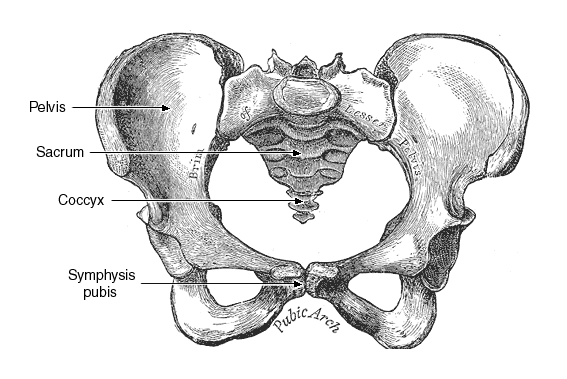
Well, I finally got up the courage to google search "crotch pain" (I have googled groin pain during pregnancy and didn't seem to find a lot of help) and found the answer! Symphysis Pubis Disorder, or SPD. Symptoms include pain when you:
walk (yes!)
get in and out of the car (yes! yes!)
roll over in bed (oh, this is the worst)
and putting on your trousers (that simple movement of picking up my leg)

See where the symphysis pubis is? That's where it hurts.
I'm reading this information online and just thinking "Finally! An answer!" You know how that is when you finally figure out what exactly an ailment is; that alone is relieving. Well, there's really nothing that can be done. Its just one of those things. I read that one of four pregnant women suffer from SPD, and its just the pelvis relaxing and opening, which is definitely a good thing for childbirth, but when its relaxing and shifting it sort of misaligns, and this is what causes the pain, and why only some women get it. I guess only a few of us are misaligned. I'm supposed to try things like heating it, or wearing a maternity support belt (but that doesn't sound comfy).
I might go to the chiropractor and see if they can re-align me. I never did go even though that as the only advice I got from my midwife and doctor. Mainly because I hate pulling a name out of the insurance hat. You never know if you'll get a good one. I am a bit disappointed that neither my midwife or the OB knew what this was when it seems quite common on google. I have my 24 week appointment on Friday, so I'll ask/tell her about it then.
UPDATE 4/23/2010:
I did end up going to a chiropractor on Monday. It was SO much worse afterwards! It went from a little painful, to oh my gosh, I can barely walk. It was so much worse, and radiated from my pubic area all the way around my left hip socket and down my leg. Unfortunately, I was also on travel Monday afternoon through Wednesday evening, so I had to live with it. I had a 2nd appointment on Thursday. By this time, the pain had died down to about what it was before the chiro got ahold of me. Well, he did some more adjustments and said that he wished he could x-ray me to see the bones. After the adjustment yesterday it was way better! So, maybe he just had to "play around with it". Not sure, but it was so much better yesterday. I went yet again this morning, and he did a few more adjustments, so hopefully it will be even better. I hope he didn't twist me back up!
UPDATE 4/28/2010:
Well, after that magical visit last Thursday where I felt loads better, I went again on Friday and it went back to not at all better. I have now been to the chiropractor 6 times, and I feel the same, if not worse than I did before. I think I feel worse because it seems the more it is messed with the more it hurts, and it spreads. Yesterday my whole hip and hip flexor region hurt, but I think that it was just irritated, today it is back to just my pubic area. I just don't want it to keep getting worse. A friend told me it would come and go as things move and stretch as my pregnancy progresses, so I do hope it goes. Anyway, I'm discouraged because the chiro didn't seem to help. I read tons of stories online about how women found complete relief from the chiro visits, but I'm not getting it so far.
Well, I finally got up the courage to google search "crotch pain" (I have googled groin pain during pregnancy and didn't seem to find a lot of help) and found the answer! Symphysis Pubis Disorder, or SPD. Symptoms include pain when you:
walk (yes!)
get in and out of the car (yes! yes!)
roll over in bed (oh, this is the worst)
and putting on your trousers (that simple movement of picking up my leg)
See where the symphysis pubis is? That's where it hurts.
I'm reading this information online and just thinking "Finally! An answer!" You know how that is when you finally figure out what exactly an ailment is; that alone is relieving. Well, there's really nothing that can be done. Its just one of those things. I read that one of four pregnant women suffer from SPD, and its just the pelvis relaxing and opening, which is definitely a good thing for childbirth, but when its relaxing and shifting it sort of misaligns, and this is what causes the pain, and why only some women get it. I guess only a few of us are misaligned. I'm supposed to try things like heating it, or wearing a maternity support belt (but that doesn't sound comfy).
I might go to the chiropractor and see if they can re-align me. I never did go even though that as the only advice I got from my midwife and doctor. Mainly because I hate pulling a name out of the insurance hat. You never know if you'll get a good one. I am a bit disappointed that neither my midwife or the OB knew what this was when it seems quite common on google. I have my 24 week appointment on Friday, so I'll ask/tell her about it then.
UPDATE 4/23/2010:
I did end up going to a chiropractor on Monday. It was SO much worse afterwards! It went from a little painful, to oh my gosh, I can barely walk. It was so much worse, and radiated from my pubic area all the way around my left hip socket and down my leg. Unfortunately, I was also on travel Monday afternoon through Wednesday evening, so I had to live with it. I had a 2nd appointment on Thursday. By this time, the pain had died down to about what it was before the chiro got ahold of me. Well, he did some more adjustments and said that he wished he could x-ray me to see the bones. After the adjustment yesterday it was way better! So, maybe he just had to "play around with it". Not sure, but it was so much better yesterday. I went yet again this morning, and he did a few more adjustments, so hopefully it will be even better. I hope he didn't twist me back up!
UPDATE 4/28/2010:
Well, after that magical visit last Thursday where I felt loads better, I went again on Friday and it went back to not at all better. I have now been to the chiropractor 6 times, and I feel the same, if not worse than I did before. I think I feel worse because it seems the more it is messed with the more it hurts, and it spreads. Yesterday my whole hip and hip flexor region hurt, but I think that it was just irritated, today it is back to just my pubic area. I just don't want it to keep getting worse. A friend told me it would come and go as things move and stretch as my pregnancy progresses, so I do hope it goes. Anyway, I'm discouraged because the chiro didn't seem to help. I read tons of stories online about how women found complete relief from the chiro visits, but I'm not getting it so far.
Friday, April 9, 2010
Pet peeves
A good rant post, meant to be purely fun! The social (and medical) perceptions of pregnancy that absolutely drive me crazy:
When people say pregnancy is actually 10 months.
Pregnancy is not and has never been 10 months! People say this because they say that pregnancy is 40 weeks, and 4 weeks = a month so it must be 10 months. First of all, it is not 40 weeks, it is 38 weeks, which I guess is a whole other pet peeve. The first two weeks of pregnancy is before conception. And besides that, every month besides February has more than 4 weeks in it. Get a calendar, and literally count 40 weeks and you'll come up with 9 months and 1 week. Subtract the 2 weeks that count as being pregnant when you're not and you end up with 9 months minus 1 week. So technically, an average pregnancy is less than 9 months +/- a week or two.
Stork Parking
That's right, I think stork parking is ridiculous. Just because I'm pregnant doesn't mean I'm disabled so I don't want to be treated as such! I actually think stores should have more parking for parents with young children so they don't have to drag toddlers through busy parking lots. But all people could use a bit more exercise, including pregnant women.
The big deal about fish
Certain types of fish should be avoided during pregnancy (actually avoided always) because of high mercury levels. These are large predator fish. So unless you are a shark connoisseur, you usually don't have to worry about what fish to eat. Shark, mackerel, tilefish, swordfish... I have actually never had any of these fishes. The only fish I like that should be avoided is tuna and tuna steaks, otherwise fish is not only a go, not only healthy, but essential! Baby brain development relies on Omega-3's, so a lot of health prescribers are suggesting pregnant women take a fish oil supplement. So eat your salmon!
Soft Cheese
While I'm discussing food, every pregnancy book, website, and information sheet I have read says to avoid soft cheeses. Why? Because it could possibly maybe not be pasteurized. I'm not going to get into pasteurization, but if you get your cheese from the mega-mart I guarantee it is pasteurized. They all say on the package too. I literally stood in the cheese bin at Kroger looking at every piece of Brie they had and didn't find a single one that was unpasteurized. And goat cheese? Ultra-pasteurized!! I have heard women get totally freaked out if they accidentally eat some Brie at a party. Unless you can find specialty unpasteurized cheese from a cheese monger in a major city (even then it will be farmed and produced well and unlikely to carry bacteria), I really don't think this is something to get worked up about.
People who think being pregnant gives them the license to eat chocolate (or french fries, or ice cream)
I'm no stick in the poo. I splurge too. I love, love, love (love, love) sweets. I eat dark chocolate pretty regularly, had a piece of cake a a colleague's retirement party yesterday, and even got a small milk shake from Sonic last week. (Who can resist buy one get one free!) But its when pregnant women believe that now that they are pregnant, they get to eat like a pig that really bothers me. Pregnancy is one time in your life that it is so essential to eat well. Eating processed and fried junk food regularly results in excess weight gain, constipation, and worse things like gestational diabetes, and even worse yet, a weak unhealthy baby. This is the one time that women should be more conscientious of what goes in their bodies since it is not only their health and well being, but their baby's. So what to do about those sweet cravings? I eat small pieces of dark chocolate, and also make my own baked goods. I can make delicious cookies and cakes using all natural and unprocessed ingredients. Way better than a box of Oreos!
What are your pet peeves? Please share, I'd love some reader involvement! (and if you can't think of any relating to pregnancy, well, just give me a random pet peeve :) )
When people say pregnancy is actually 10 months.
Pregnancy is not and has never been 10 months! People say this because they say that pregnancy is 40 weeks, and 4 weeks = a month so it must be 10 months. First of all, it is not 40 weeks, it is 38 weeks, which I guess is a whole other pet peeve. The first two weeks of pregnancy is before conception. And besides that, every month besides February has more than 4 weeks in it. Get a calendar, and literally count 40 weeks and you'll come up with 9 months and 1 week. Subtract the 2 weeks that count as being pregnant when you're not and you end up with 9 months minus 1 week. So technically, an average pregnancy is less than 9 months +/- a week or two.
Stork Parking
That's right, I think stork parking is ridiculous. Just because I'm pregnant doesn't mean I'm disabled so I don't want to be treated as such! I actually think stores should have more parking for parents with young children so they don't have to drag toddlers through busy parking lots. But all people could use a bit more exercise, including pregnant women.
The big deal about fish
Certain types of fish should be avoided during pregnancy (actually avoided always) because of high mercury levels. These are large predator fish. So unless you are a shark connoisseur, you usually don't have to worry about what fish to eat. Shark, mackerel, tilefish, swordfish... I have actually never had any of these fishes. The only fish I like that should be avoided is tuna and tuna steaks, otherwise fish is not only a go, not only healthy, but essential! Baby brain development relies on Omega-3's, so a lot of health prescribers are suggesting pregnant women take a fish oil supplement. So eat your salmon!
Soft Cheese
While I'm discussing food, every pregnancy book, website, and information sheet I have read says to avoid soft cheeses. Why? Because it could possibly maybe not be pasteurized. I'm not going to get into pasteurization, but if you get your cheese from the mega-mart I guarantee it is pasteurized. They all say on the package too. I literally stood in the cheese bin at Kroger looking at every piece of Brie they had and didn't find a single one that was unpasteurized. And goat cheese? Ultra-pasteurized!! I have heard women get totally freaked out if they accidentally eat some Brie at a party. Unless you can find specialty unpasteurized cheese from a cheese monger in a major city (even then it will be farmed and produced well and unlikely to carry bacteria), I really don't think this is something to get worked up about.
People who think being pregnant gives them the license to eat chocolate (or french fries, or ice cream)
I'm no stick in the poo. I splurge too. I love, love, love (love, love) sweets. I eat dark chocolate pretty regularly, had a piece of cake a a colleague's retirement party yesterday, and even got a small milk shake from Sonic last week. (Who can resist buy one get one free!) But its when pregnant women believe that now that they are pregnant, they get to eat like a pig that really bothers me. Pregnancy is one time in your life that it is so essential to eat well. Eating processed and fried junk food regularly results in excess weight gain, constipation, and worse things like gestational diabetes, and even worse yet, a weak unhealthy baby. This is the one time that women should be more conscientious of what goes in their bodies since it is not only their health and well being, but their baby's. So what to do about those sweet cravings? I eat small pieces of dark chocolate, and also make my own baked goods. I can make delicious cookies and cakes using all natural and unprocessed ingredients. Way better than a box of Oreos!
What are your pet peeves? Please share, I'd love some reader involvement! (and if you can't think of any relating to pregnancy, well, just give me a random pet peeve :) )
Thursday, April 1, 2010
Book Review - Real Food

Real Food for Mother and Baby
The Fertility Diet, Eating for Two, and Baby's First Foods
by Nina Planck
It has only been about seven months since I first had an appointment with my now trusted Herbalist, Linda Lucas. It wasn't until this meeting that I started to shift my basic thinking on nutrition from "diet food" to "whole food". I have always been very adamant about eating a diet in a wide variety of whole foods - fruits, vegetables, whole grains, but I also paid entirely too much attention to calories. I thought that I should only eat about 1200 calories a day. Mind you, I was working out 5 to 6 days a week. 1200 calories was entirely too little, and once I started eating only whole foods, and ditching diet foods like skim milk (that is not to say I switched to whole milk, but that I ditched milk entirely), low calorie, low sugar, low carb items like light syrup, low calorie bread, and nonfat yogurt, I actually lost weight. Just by eating more nutrient-rich foods, which I guarantee was A LOT more calories than I was consuming, I ended up losing about 10 pounds. I tell you, this wasn't my goal, it was more a by-product. My goal, was to get pregnant. I did that too - by getting rid of "junk" - what little processed food I still ate (and drank! hello Crystal Light), and all estrogen rich foods, which includes dairy and soy.
This book has nothing to do with weight-loss. It has everything to do with proper eating in a time when we are overloaded with processed foods. Planck defines "real food" as what is old and traditional. And by old, she means OLD. Not even what people ate in 1900, but what people ate in 1500. Her first chapter is a description of what constitutes real food, explaining fruits, veggies, fish, meat, and dairy. By concentrating on eating only real food, one does not need to really think about nutrition, vitamins, minerals or weight. Diet, processed, and convenience food is what is killing us. Literally. We know more about nutrition now than any other time in human history, yet our diets are worse now than any other time in human history.
Planck's book is extremely opinionated (why do I care if she doesn't like the term "sippy cup"?), and I didn't always agree with everything she had to say. For instance, in the chapter where she discusses nutrition in the first trimester, Planck suggests that if you can not eat because you are sick or nauseated, then just don't eat. Some women may throw-up so much that they are unable to keep down proper nutrients, but this doesn't mean that you can just wave off all nutrition and assume that a baby can somehow get the nutrients it needs, anyway. Not only does this not make sense (if you aren't putting nutrients in, where is the growing baby going to get it?) but my midwife and herbalist both said "Eat constantly!" which I found did help, a lot. I was more sick on an empty stomach, so I can't imagine just saying "Oh Well." to food entirely. Planck writes about how incredibly tired she was during her first trimester, and I'd have to say so, since she admits she hardly ate.
One other thing that I thought Planck should address better is that a person can not toe the line and eat real food and processed food. Real food includes butter (organic, grass-fed), whole raw milk, red meat (grass-fed only), and even ice cream. A person can not integrate these foods into a current diet unless they evaluate their entire diet. Suddenly saying "Oh, wow, butter can be good for you!" and starting to slather their white bread and crackers with butter, is not the point. This would result in weight gain, and a wide variety of health issues.
I found myself glad to be vegetarian (ok, I lie - pescetarian) because I personally can not afford "real meat". Real meat is grass-fed lamb, beef, pork, and free-range chicken. Commercial meat products come from animals that are fed an extremely poor diet of corn and soy, and are usually injected with antibiotics and hormones. I'm sure "real" meat is part of a healthy diet, but I for one, can't afford it. So I'll skip it. :)
Finally, Planck's last chapter is all about baby's first foods. She believes in feeding baby real food that you are already eating. Planck promotes exclusive breast feeding until baby can sit up on his own and starts to show interest in solid foods, which is usually around 6 months. Then she promotes giving baby small pieces of food off your own plate to let them experiment with tastes and textures. One statement Planck made that I particularly enjoyed is that if your baby is breastfed, they are already used to a wide variety of tastes and spices (Indian anyone?). It is counter intuitive to then assume that after these broad tastes, baby needs plain, bland, unseasoned food, which Americans, unsurprisingly, are one of the only cultures of people that do feed their babies special "baby food". She believes this is actually what makes picky eaters. She promotes that a baby who is able to experiment with food on his own, using his own hands and fingers allows him to be much more confident with food and making food decisions later in life. This method is also promoted as being much more parent friendly as parents do not have to take the time to make baby food, or spend the money to buy jarred food, and it is much less of a struggle at feeding time. This does make sense, and is certainly not a new theory, as this was how parents used to feed their children before Gerber got ahold of us. I'm pretty sure this is how I was fed, too since my parents grew their own food.
I have always said a general nutrition rule of thumb is to not eat anything that comes in a box or a bag. This is a virtually fool-proof way to eat only whole foods, without having to count, monitor, or think about your diet. I believe this is Planck's message, applied to parents and babies. Her book just goes into much greater detail about organic food, which ones are worth the money, which ones you can eat non-organic, and a lot about meat and dairy which probably is new information for most of today's consumers. It was a very valuable read for me, to expand my knowledge of food, and more importantly what real food is in a grocery store full of artificial foods.
Friday, March 26, 2010
Halfway Home!
Today I am 20 weeks! I am so overjoyed and feel unbelievably blessed to be pregnant and to have a healthy baby. I know that now is when I will really start to balloon, but I just love it! Every day I look at my perfect round tummy and just want to give it a hug. I feel fabulous and I'm truly loving every minute of it.
We went with my midwife to the Middle Tennessee Women's Health Group this past Wednesday for an ultrasound and an OB consult. Before the ultrasound, I really wasn't that into it. The only reason I was getting one was because Mary Anne wanted me to. She wants to know where the placenta is attached and various other things. I, personally, didn't care. I have very mixed feelings about ultrasounds. For one, I just don't think they have been around long enough to know if they are safe or not. People used to only have one and no more unless there was the suspicion of a problem, now women have one at 8 weeks and then subsequent ultrasounds in the prenatal visits following. So use has definitely become more and more common, but there are no long term studies since ultrasounds weren't even used until the 80's and have only been used regularly in the recent years. For two, I personally felt that if the ultrasound showed a problem or a birth defect, it wouldn't "prepare me emotionally" it would steal my joy. So for me, its not that I was afraid of something being wrong, it was that I just wanted to rely on the Lord and trust that he is the one growing my child. I know a lot of other parents would want to know ahead of time so they can prepare, but I just don't think I would. I don't think that 5 months would help me much, it would only upset me. BUT.. all that to say, that I did enjoy the ultrasound. There really is nothing like actually seeing the baby. Tiny arms, tiny legs, tiny ribs that look like fish bones. A tiny mouth, that made tiny little swallows. Tiny muscles that he/she flexed for us. No, we did not find out the gender. The tech said that she would not even go to that area if we didn't want to know, that she would try to keep from knowing herself. I think she did see, because she told me to close my eyes once (and I did!) so it remains a surprise for us! Our ultrasound revealed a perfect, healthy baby (only one baby!) and we walked away feeling in awe of the growing miracle in my body.
The OB consult was just that, a consult. I met with Dr. Davis who was extremely nice and didn't look at her watch once (hehe). She would be my OB if I was ever in need of one. She was very supportive and thought it was great we are doing a home birth, answered a few of my questions, and then we were off, saying "Nice to meet you, but hope we never see you again!" Mary Anne knows this office very well as she brings most of her clients here, and she goes there herself for her annuals, so it was a very relaxed and personal environment.
I am just so excited and am really the happiest I've been in my whole life. I love feeling my baby twist and flex those little muscles. I can imagine now what each little twitch is since he/she was active during my ultrasound. I think about when he/she's sleeping and when he/she's practicing swallowing and flexing those lungs. You could say that I'm totally in love!
Further reading:
A really interesting article about ultrasounds and detecting problems early
Wednesday, March 3, 2010
What You Need and Why

I think its high time we go over vitamins and minerals and what they are good for specifically during pregnancy. Sound like a snooze? Well, at least next time you think "What the heck is riboflavin?" you'll know!
First the biggies, Protein, Carbs, and Fat. Protein is needed for muscle growth, which we all know, but extra protein is needed during pregnancy for expanded blood volume, formation of amniotic fluid, and development of the placenta. The baby uses protein for muscle and tissue formation and brain development. When they say a pregnant woman needs "more" protein than normal it means 71g versus 46g that a non-pregnant woman needs. I think its safe to say that anyone who eats meat already meets this requirement and may not need to worry about getting extra. Vegetarian sources include beans and legumes, dairy products, eggs, nutritional yeast, nuts, seeds, soy, and whole grains.
Carbs Meaning complex carbohydrates allow your body to absorb nutrients and sugars gradually and help the digestive system function efficiently.
Need: 175g
Sources: Beans and legumes, fruits, nuts, seeds, vegetables, whole grains
Fat is crucial for cell development and fetal brain development, it also maintains healthy blood, circulation, and nervous system. Fat is the main source for fat soluble vitamins A, D, E, and K. Omega-3 fatty acids are important for brain and nervous system development.
No recommended amount given
Sources: Avocado, eggs, nuts and nut butters, oils (cold pressed nut, olive, seed), seeds and seed butters
Vitamin A is a fat-soluble vitamin important for formation and growth of baby's cells, tissues, and bones. Essential for eye development and health of the immune system.
Need: 750mcg
Sources: Dairy products, dark green leafy veggies, orange and yellow fruits and veggies
Thiamin (B1), Riboflavin (B2), Niacin (B3) are B vitamins that work together and are found mostly in the same foods. They promote healthy nerves, skin, eyes, hair, liver, and muscle tone. They help convert carbs to energy and protect you from mental disorders and depression. Riboflavin and Niacin are important for cell reproduction and growth.
Need: 1.4, 1.4, and 18mcg respectively
Sources: Avocado, bananas, brown rice, dark green leafy veggies, dried fruit, eggs, nutritional yeast, sweet potatoes, sunflower seeds
Folate is a big one as it is essential for formation of cells in the growing baby. Meeting the requirements of folate prior to and after conception is shown to reduce risk of certain birth defects. Cooking can destroy some folate, so eating raw veggies and fruits is good.
Need: 600mcg (my midwife says 1000mcg)
Sources: Asparagus, avocado, beans and legumes, broccoli, brussels sprouts, dark green leafy veggies, fruit, nutritional yeast, nuts, romaine lettuce, root veggies, seeds, wheat germ, whole rye, whole wheat
Vitamin B12 is vital for formation and growth of red blood cells and growth of the baby's nervous system. It is one of the most commonly deficient vitamins during pregnancy and lactation especially among vegans because it is found mostly in animal products, however quite a few foods are fortified with B12 (I know my rice milk is).
Need: 2.6mg
Sources: Dairy products, eggs, fortified cereals and such.
Vitmain C is essential for healhty tissue, teeth, and gums. It is also needed to resist infections and for absorption of iron.
Need: 85mg
Sources: Berries, broccoli, cabbage, cantaloupe, cauliflower, citrus fruits, dark green leafy veggies, kiwi, papaya, parsley, potatoes, red bell peppers, tomatoes, watercress
Vitamin D is needed for absorption of calcium and phosphorus. The only plant containing vitamin D is mushrooms.
Need: 5mcg
Sources: The sun, eggs, fortified dairy products, mushrooms
Vitamin E is an antioxidant that protects against tissue damage and inflammation. It is needed for circulation, tissue repair, and healing.
Need: 15mg
Sources: Nuts, seeds, soybeans, wheat germ
Vitamin K K1 is mainly found in plants, while K2 is the other, less important source which is made by bacteria in the gut. Vitamin K is essential to blood clotting, and reduces the risk of postpartum hemorrhaging.
Sources: Broccoli, Green leafy veggies, olive oil
almost done.....
Calcium is essential for bones and teeth of both baby and mother. It is especially important during the 3rd trimester when the baby goes through rapid development. There are plenty of sources of calcium besides dairy.
Need: 1300mg
Sources: Beans and legumes, blackstrap molasses, broccoli, carob, dairy products, dark green leafy veggies, figs, nettle teas, nuts, quinoa, red raspberry leaf tea, sea veggies, seeds, tofu
Iron This one drives me crazy because often people (and some doctors) think you have to have lots of red meat during pregnancy, which is totally untrue. My blood work showed that I had a good hemoglobin count and I don't eat any red meat, so it is quite possible to thrive on a vegetarian diet, in this aspect. HOWEVER it is true that iron from animal sources is more easily absorbed than iron from plant sources. There are ways to help your body absorb plant-based iron. Vitamin C aids the body's absorption of plant based iron, and so does soaking or sprouting your grains. You can also cook in cast-iron pans. So Iron is needed for the formation of blood to transport oxygen to cells. Maternal blood volume increases about 25 % during pregnancy so increase iron intake is important. Iron is not the only way to build blood cells, another excellent source is CHLOROPHYLL! Which is obviously in green veggies. Chlorophyll is so great I plan on having a post just about it.
Tannins in coffee and tea decrease absorption. Iron needs also increase when you are lactating.
Need: 27mg
Sources: Amaranth, blackstrap molasses, beans and legumes, dark leafy green veggies, dried fruit, nettle tea, nuts, quinoa, red raspberry leaf tea, sea veggies, seeds, and tofu
Magnesium is needed for formation of new tissue. It may also help prevent leg cramps.
Need: 350mg
Sources: Beans and legumes, blackstrap molasses, dairy products, dark green leafy veggies, dried fruit, nuts, sea veggies, seeds, whole grains
Sodium does not need to be restricted during pregnancy, and is essential to maintain fluid and regulate electrolytes. Unrefined Celtic sea salt is the best source because it contains essential minerals and trace elements, and has no additives. The American diet is high in processed salt, which is quite bad for you.
Zinc is important for maintaining immunity, healing wounds, and metabolizing fat.
Need: 11mg
Sources: Beans and legumes, dairy products, nuts, sea veggies, seeds, and whole grains
*Sigh* I wonder if anyone read this the whole way through... I'd say skimming is good! Until you really want to know!
Olson, Cathe. The Vegetarian Mother's Cookbook: Whole foods to nourish pregnant and breastfeeding women ~ and their families. GOCO Publishing, 2005. pp 17-23.
And a shout out to my friend Laura, because this book is what the Amazon gift certificate she gave me for my birthday bought.
Subscribe to:
Posts (Atom)