Showing posts with label books. Show all posts

Thursday, March 15, 2012

Books I Love: The Vaccine Book

OK, so I don't actually love The Vaccine Book, but if it were up to me, each baby would be born with this book.

Did you know you have choices when it comes to what vaccinations you give your baby and even when you give them? I know many, many, too many parents leave all of their children's health care decisions up to the "professional" but YOU know your baby better than anyone and YOU are responsible for your baby's health. The AAP has a recommended vaccination schedule that a group of doctors and the vaccine manufacturers came up with together. The schedule is purely a recommendation and thank God, it is not law. You can actually pick and choose your vaccines, even different brands of the same vaccine, and pick your own schedule. The Vaccine Book by Dr. Robert Sears puts vaccination decisions back in the parent's hands by informing parents of each vaccine.

The book lists each vaccine out on the market today and tells what disease the vaccination targets, how common or rare the disease is, if it is serious, what the vaccine is made of, what the controversial ingredients are, what you should consider by getting it or not getting it, and then a small personal note on the way he sees it. This book is about as unbiased as you are going to get with straight facts (and a sentence or two of Dr. Sears' opinion.) You are not going to get this kind of information at the doctor's office. The doctor is going to tell you what the recommendation is, nothing more, nothing less. They may give you a pamphlet of the vaccines that is made by the manufacturers for parents and only lists what they want you to know. It is going to be completely biased and you are not going to get good information. If you want to really know about vaccines you have to do your own research and this book is a great place to start. In fact, it may be all you need to make your own decisions.

Doctors often do not take too kindly to being told what to do, so you should really shop around for a doctor that fits your philosophy and will treat you, the parent, with respect, and leave the decisions up to you. This is also why they recommend shopping for a ped while you are still pregnant. Not just so you can "get in with the good ones" but so you can find one that fits your parenting philosophies.

Happy reading! Truly making informed decisions about your baby's health is really difficult. You must weigh everything- the facts, your gut instincts, and when you have to make a decision about something so controversial you must pray, pray, pray! After you have weighed all the options you can choose to vaccinate with all the recommended ones, on the recommended schedule, you can choose to vaccinate some on the recommended schedule, you can choose all on a delayed schedule, you can choose some on a delayed schedule, and finally, you can choose none. There are endless combinations and possibilities so don't let anyone else, not your mother, friend, sister, mother-in-law, or even your doctor, decide what you should do. And finally, if you aren't 100% sure, then wait. Don't let anyone jab your baby without your full informed consent. You can always get the vaccine later, but you can never take one back once given.

Further reading, and a preview: The Vaccine Book's Website

Monday, October 17, 2011

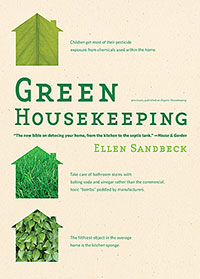
Book Review: Green Housekeeping

Green Housekeeping
by Ellen Sandbeck

Easily a great reference to all things clean, Green Housekeeping has some really great tips and ideas for cleaning everything in, under, and around your home WITHOUT any chemicals. Most of the cleaning products listed in the book are already in your kitchen pantry. Vinegar, baking soda, salt, vodka, and potentially some borax seems to be all you need to clean anything that stains, splatters, or stinks. There is also a good section on pest control in and outside of the home. Sandbeck seems to have some serious OCD issues when it comes to clutter. Her chapter on decluttering was the most obsessive I've seen on the subject, but I strangely found her OCD highly entertaining. Her bathroom cleaning routine, though advertised as only taking "5 minutes a day" seems to use "5 towels a day". You definitely need a large laundry closet to heed some of her advice.

Green Housekeeping is worth having around for the next stain you can't seem to remove, the appliances you want sparkling, or the bug you want dead, all without toxic chemicals.

Thursday, September 22, 2011

Books I Love: Taking Charge of Your Fertility

Taking Charge of Your Fertility: The definitive guide to natural birth control, pregnancy achievement, and reproductive health.
Toni Weschler, MPH

This may be one of the best books I've ever read. No I'm not kidding. I read this book two years ago when I was just starting to think about trying to conceive. In the midst of being totally amazed at what I didn't know about my own body, I couldn't help but wonder - why didn't I know this before? This is not what kids are learning in sex ed. This is not what our mother's are teaching when we first get our periods. Why? Because they didn't know. The female body has remained a mystery for even females!

This book teaches how to learn your body's natural cues of fertility. It teaches that your cycle doesn't revolve around your period, but rather ovulation. It teaches how to know when you ovulate. The natural birth control taught here is the Fertility Awareness Method (FAM). FAM is 99% effective when followed properly. It is not the "rhythm method", but rather following your bodies cues to know when you are fertile. It absolutely puts you in charge of your fertility. You can decide when to try for pregnancy or when to avoid it. It is not just looking at a calendar and counting to 14 as your OBGYN might teach. It also can tell you when you have an issue in your cycle so you and your OBGYN can be more precise and effective. The FAM combines charting your basal body temperature with other fertility cues. You may be thinking "Ugh, not charting!" A lot of people find charting laborious or stressful because they tried it when trying to conceive. I'm not going to lie, it does take work and organization. If you have trouble remembering to chart, are too busy, or don't have the discipline, then this method is not for you. But I love spreadsheets and I love learning about myself, so no big deal!

I absolutely believe that hormonal birth control is destroying our fertility. It wreaks havoc on our bodies causing more than just some uncomfortable side effects or mood swings. I believe it can cause lasting damage to your cycle. No, I don't have science to back me up. All I have is experience, testimonials, and a fair bit of speculation. So many people are experiencing miscarriages. I believe some of these could be related to hormonal birth control. Progesterone is what carries a pregnancy. Pro-gestational-hormone. It is essential to maintain pregnancy. While on birth control you do not produce progesterone. Hormonal birth control shuts down your natural progesterone and replaces it with progestin, a synthetic progesterone derived from horses' urine. Because the body is not allowed to produce it's own progesterone, it often has a bit of trouble kicking it back up once off the pill. The body could then not produce enough causing crazy cycles, delayed ovulation, or loss of a fertilized egg. Your hormones are in charge of everything from sleep, to your mood, to fertility, and a hormone imbalance can cause insomnia, headaches, weight gain, allergies, arthritis, auto-immune disorders, fatigue, etc, etc, etc. Hormone balance is very fragile, and personally, I believe hormones are nothing to mess with.

So get the book and read everything you may not know about yourself. It is totally eye opening and fascinating. Also, Weschler, has a book for teens called "Cycle Savvy: The smart teen's guide to the mysteries of her body" that teaches young girls all about their cycle. If there isn't something newer by the time my daughter enters the great abyss of puberty, then I'm definitely getting that.

Wednesday, August 31, 2011

We Like to Potty!

I'm not sure what possessed me to want to introduce Mary Abilene to the potty at just shy of one year old, but I know one day, Patrick came home from work and I announced "I want to potty train our daughter." Now, at 12 months and 3 weeks of age, Mary Abilene goes pee-pee or tries to go every single time I sit her on the potty!

When first announced I wanted to potty train, my husband's response was "Can you do that with a one year old?" Turns out, one year old can even be considered late. Many, many people are introducing their infants to the idea of potty training in America and especially other cultures where disposable diapers are not the norm.

In the book "Early Start Potty Training" by Linda Sonna, she explain that parents used to begin potty training much earlier than they do now. In 1961, before the availability of disposable diapers, 90% of children were potty trained by 2.5 years, which dropped to 22% by 1998. A study in Ambulatory Pediatrics in 2001 said the average age for completing
potty training was 35 months for girls and 39 months for boys. Yet, in the early 1900's infants were often held over a little pot and they became accustomed to going over the pot. The big debate at the time was whether to delay potty training to the age of two months. When automatic washing machines came along in the 1940's and washing diapers was no longer so difficult, infant potty training was out with hand washing. Proctor & Gamble began testing the first disposable diapers in 1961 and their spokesman, T. Berry Brazelton, had commercials that told parents that potty training should be done when children were older, and should be left up to the children to decide when they want to toilet train. The disposable diaper industry told parents that modern science was better than anything they had done before, and parents believed them. In 1998 Pampers introduced a size 6 diaper, and now, disposable diapers come in size 7, made for children of 41+ lbs. It seems to me that if the disposable diaper industry had its way, no one would toilet train! I can't find profit for Pampers alone, but P&G made over $8 billion last year alone.

So you may be wondering how on earth you potty train someone who can barely walk and can't talk. Infant potty training is called Elimination Communication and there are select people who do this with their baby. You basically don't "train" them, you learn their potty cues and hold them over a bowl or pot so they can eliminate. I had heard of this while pregnant, but I didn't want to obsess over my baby's bowels, so I didn't even read into it. Lately, I've seen in forums people who are having plenty of success with introducing the potty to an older baby and toddler. I thought it was a great idea, so we got Mary Abilene a potty and a book (the potty for her, the book for me.)

So we get BooBoo a little potty. (I like the Baby Bjorn smart potty. Its small, nothing fancy, but ergonomic and serves its purpose.) We began sitting her on it at opportune times, like after she woke up for the morning or from a nap. The very first morning that I put her on it - she pee-peed! Right in the potty. We made a huge to-do about it and threw her up in the air smiling and singing. Each time she goes in the potty, we make a big deal about how wonderful it is. She always wants to look in the potty after she gets up. It either has pee-pee or is empty and I tell her "Yay you went pee-pee!" or "no pee-pee. Its empty." It didn't take long at all for her to realize that she was making the liquid that was in the potty. She has also pooped in the potty several times, also after a nap or in the morning. Ever since we started putting her on the potty in the morning, she has gone. There have only been a few mornings that she hasn't gone, and that's usually because we waited too long after she woke up, or she wanted to nurse first. She loves books, so it has been very easy to sit her on the potty and read her some books. She stays on it as long as I'm reading.

As of just a week or so ago, we only sat her on it after waking times. Those were the most likely times for her to go, and any other time was a shot in the dark. We would also give her a lot of naked time, either outside, or on a big old comforter and watch her to see if she has "potty signals". I can recognize her signals while she's going, but not so much before she goes. Naked time also helps to know when she last went potty so then I can get better timing for when she needs to go next. But lately, she doesn't even need to sit long enough to read books. I sit her on the potty and then I go potty and she is always done by the time I'm done. One night last week, I noticed that she was actually trying to go pee-pee, that it was no longer just a coincidence of good timing. She goes when I go! I put her on the potty, I sit on the toilet, and every time she either goes, or makes and effort to go. Sometimes its just bad timing and she doesn't need to go - but she tries! I'm really surprised at how fast this is going. She quickly learned what she's supposed to be doing on the little potty! At first, we were just "catching" her pee-pee. But now, she truly does try to go as soon as she sits down. There is very little waiting, or hoping she'll happen to go while she's there. The next step is getting her to recognize when she has to go and then telling us she has to go. Obviously she doesn't talk much, and has never said "pee-pee" or "potty" but this is where signing comes in. We are teaching her a sign for potty and do it every time we take her to the potty and then while she's going potty.

After she goes potty, I try to leave her diaper-free for at least the next 30 minutes. Diaper-free time is really important for any baby. It helps them air out, get some light, and not spend so much time in a diaper. Sonna points out that a child only spends about 30 minutes a day either pottying or bathing, so why are they in diapers the other 23 hours and 30 minutes? Because of disposable diapers, more and more children are suffering from diaper rash (78% of them) and are being left in diapers longer because they "stay dry". The stay-dry effect is also very bad for learning to potty. If a child never knows when they go, it will be very hard for them to learn their biological cues. Sonna points out that essentially we are teaching babies to go only in their diaper. Every new parent has been sprayed on the changing table, but have you noticed that after only a few weeks or months, the baby stops spraying naked? They get used to pottying in the diaper and learns that is where potty goes. Multiply that by several years and you have a pre-schooler who has a very strong association of pottying in their diaper. They essentially can't not potty in their diaper.

I imagine some people are thinking "Well, that's cute and all, but what's the big deal?" Money is one of the big deals. The average child goes through $2,000-$3,000 worth of disposable diapers. That number could be cut in half. To me, even though I have already invested in cloth diapers, I spend money washing diapers. I also don't like to rinse out poop. Mary Abilene thinks diaper changes are a big deal, squirming, screaming, and otherwise hating every second she spends on the changing table. She only wore 2 diapers all day today. The rest of the time she spent comando. She went 4 times in the potty today. A girl that goes in the potty four times doesn't have to wear diapers! The other big deal is hygiene. Sonna spends a large portion of the book talking about hygiene and why it is important to not leave babies sitting in their own mess. Diaper rash used to be a sign of child neglect, now it is considered "normal". Urine is very acidic and can cause rashes. Poop contains lots of bacteria and that bacteria can travel to other "sensitive" places in little girl's diapers. There is also suggestion that diapers heat up testicles to an unhealthy temperature and can cause fertility issues later in life.

You might also think "It sounds like too much work to teach a baby to go in the potty." Actually, it is very little effort, and the effort that is involved is really fun! Sonna points out that the traditional potty training age of 2.5 to 3 years is when children are most stubborn and least likely to want to take time out from playing to go potty. Pre-schoolers often refuse to go in the potty, often because they do not know how. It would be like sticking an adult in the middle of the room with someone commanding them to "Go potty." This is not where I usually potty - why should I potty here, now? But a baby or young toddler loves to emulate everything their parent does. They respond really well to praise and excited voices. There is much less pressure because I don't have a potty training deadline (like some might have for starting preschool). I don't put pressure on "accidents" or have any sort of reprimand for not pottying in the potty. It is purely fun and enjoyable for both me and Mary Abilene.

I really like to call it "potty learning" as opposed to "potty training". I'm not training my baby girl, but rather, I'm helping her learn. A child needs opportunity to learn to do everything. They need opportunity to learn to crawl, learn to walk, learn to eat solid food; they just need the chance. I didn't have high expectations when we started sitting her on the potty. I just wanted to introduce the potty and help her learn the sensations and the urge to potty. I am really amazed at how quickly she is learning this and seems to really "get it", that she even wants to go in the potty. When she sits down, and starts to tinkle she smiles up at me so big. Like, "Look, Mommy! I'm doing it!" She is proud of herself, and I am so proud of her!

Thursday, March 17, 2011

My milk supply is a garden.

"Milk supply is not something you can just spontaneously lose, like a set of keys or a pair of glasses. It's more like a garden. Neglect it, by limiting feedings or supplementing with formula, and it will wither. Tend it, by feeding on demand, and it will flourish."

That was a great quote I found on a message board. I have no idea who the poster is, but I wanted to share it.

If you have or plan on breastfeeding it seems all the rage is "will I have enough milk?" or "is my supply dropping?" I just finished reading (probably three times) The Womanly Art of Breastfeeding. It is a beautiful, timeless book by La Leche League International. I know a lot of people think the LLL is a little weird, but maybe that is because they have not read the book. It is a beautiful description and comprehensive problem solver on all things breastfeeding. If anyone knows how to nurse, its the LLL. They stress on demand feeding for a healthy milk supply. The hormones that make milk are absolutely amazing. They respond perfectly to YOUR baby. It is supply and demand at its finest. Restrict the demand by watching the clock or substituting yourself with a pacifier and you might have supply problems. The first several months of a newborn's life are crucial to the mother's milk supply for the entire nursing relationship. The first weeks and months "set" the milk supply. Restrict feedings for whatever reason and the mother may not be able to keep up with her baby's need in the months to come. Of course there can be other reasons for a low milk supply than not nursing on demand, there is a good list here. The book covers this and has suggestions for increasing supply. One thing I found very interesting is that, according to the book, more women have an oversupply than undersupply. This is also covered, with suggestions.

The book covers so many subjects, with sections on nursing according to age, starting solids, sleep, weaning, and a pretty good problem solving chapter. But its main point centers around On Demand feeding. It seems that is the only way to keep a baby happily nursing for one, two, or more years. I loved this extremely well written book. It made me happy, it made me cry, and it made my love for my baby bubble up and spill over every time I read it. If you have nursed, are nursing, or think you might nurse, this is the only book you need.

The Womanly Art of Breastfeeding by Diane Wiessinger, La Leche League International, Diana West, Teresa Pitman

Thursday, February 17, 2011

Book Review: Secrets of the Baby Whisperer

Secrets of the Baby Whisperer: How to Calm, Connect, and Communicate, with your baby
By Tracy Hogg

Sometimes I honestly believe that we would be the best parents we can be if we didn't read any parenting books. We would also have to erase, or deprogram, all societal influences in order to do what makes you, your baby, and your family happy and comfortable without outside influences of shoulds and shouldn'ts that we are all bombarded with unintentionally. Only then, would we do what makes us happy, what comes natural, without caring what any other parent or grandparent thought. But sometimes you need help, advice, or ideas. Sometimes, as a new parent, you just have no idea what to do so there is an endless supply of parenting books on the market and finding the ones that you like and agree with takes reading some that you dislike and do not agree with.

I didn't read any parenting books during my pregnancy. I couldn't even force myself to think past August 13 (my due date) I was so involved in my pregnancy. We did watch "Happiest Baby on the Block" (maybe I should do another post on that) but that was it. That DVD really helped with the first few weeks. We were happy, we were doing our own thing, we were parenting. Then along came "Secrets of the Baby Whisper". I read this book when Mary Abilene was one month old and I absolutely hated it. I got it because another parent at church talked about how it explains and decodes a baby's cries. That was exactly what I wanted as a new parent, to help me understand what my baby needed. However,the book only had a small section on decoding cries, and mostly made me feel like a bad parent, simply because I fed my baby more than every 2.5 - 3 hours. Hogg states that (paraphrased) "no healthy baby should nurse more often than every 2.5 hours." I now find that to be a completely misinformed statement. I since learned that every baby and every breast is different and there is no set time limit to put on feedings.

Before I embraced the fact that Mary Abilene and I were both perfectly happy nursing every two hours (until she was four months old, when she extended the time between herself) I tried to extend the time between her feedings. At one month old, it was the worst three days of my and Mary Abilene's relationship. She was entirely too young to be told when and when not to nurse, and I loved comforting my baby. We scheduled, charted, and tried other comforting measures before nursing, but she was HUNGRY and I was unwittingly depriving my baby. This is a recipe for breastfeeding disaster. Schedules inadvertently decrease milk supply, ESPECIALLY in the early weeks of a baby's life. Nursing often, round the clock, is healthy and natural and ensures a milk supply to meet the baby's needs. In short, I am very much an advocate for nursing on demand. Even if she just wanted to nurse for comfort, I find that completely acceptable and enjoyable to share that with her.

It took going through those three days and realizing that just because it is published doesn't make it right for us. I threw out the book and went back to our previous nursing dynamic. In short, I wish I had never read this book. I also have a major issue with step-by-step parenting books and books that claim always and nevers. Babies do not come with a manual for a reason - no two babies are the same. Any book that claims everyone should do this or no one should do that gets a grade F in my book.

Otherwise, the book is about "flexible schedules" with Eat, Activity, and Sleep rotating through the day, in that order. The sleeping section was also not for me. Hogg suggests putting a baby to bed awake because they "have to learn to be independent from birth". Although she doesn't advocate cry-it-out, her method is sure to cause a lot of tears. Hogg seemingly doesn't account for differences in babies and parents and doesn't acknowledge that there is truly no such thing as a "normal" baby.

There are a couple positive things I did get out of the book. One is to listen to my baby. Not to just assume I know what she wants when she cries (to nurse) but to listen to what she is trying to tell me. It is hard with a newborn, but as she gets older, she clearly expresses likes and dislikes, needs and wants, and listening to a baby from birth facilitates listening to your baby as she grows older. Another good point was to treat your baby like a person. Hogg suggests talking a baby through a diaper change, telling your baby what you are going to do, and asking permission to enter her space. "I'm going to pick you up now. Come to mama!" Instead of hoisting babies here and there with no respect to their own person. We still talk Mary Abilene through diaper changes and getting dressed and she loves it.

The book is very popular, so clearly other parents like the "flexible schedule" system. We, personally, do not put Mary Abilene on a schedule. She can't tell time! However, left to her own devices, she naps about the same time every day, goes to bed about the same time every day, and gets up about the same time every day. She ended up scheduling herself. I just do not think you can put a baby who is not sleepy to bed because the clock says so, or keep a tired baby up longer. I also do not believe in waking a sleeping baby. (This is not necessarily the advice in the book.) However, I do recognize that there are other families who very well may need a scheduled baby. Other children in the house is the first reason that comes to mind. Other families may not have the luxury of letting their baby run the show for one reason or another. Please recognize that I review this book with a newborn in mind. I absolutely believe in building a consistent and reliable routine for older infants and toddlers. I certainly do not think I will let a three-year old decide when she wants to go to bed! I do not mean to say that this book is unacceptable for every family, it just doesn't work for us.

Thursday, February 3, 2011

Baby-led Weaning


Baby-led Weaning:
Helping your baby to love good food.
By Gill Rapley and Tracey Murkett


I know it probably seems like we do everything different, and apparently feeding baby proves to be no exception. I always thought that I would make my own baby food, but when I learned about baby-led weaning, I thought it was even a better idea. I came across baby-led weaning accidently. Another blog website I frequent had a small excerpt about it since that was how they fed their babies. I looked it up and thought it was pure genius. Actually I really thought it seemed like common sense.

"Weaning" does not refer to weaning from the breast so much as it refers to the process of starting solid foods from exclusive milk feeds and eventually eating only solids. It is just that instead of being parent led i.e. the parent is in control of when, what, and how much baby eats, the baby is in control of this (solids and milk feeds).

"Forget baby purees, ice cube trays, and weaning spoons, and simply let your baby feed himself." The concept is that you offer your baby table food. Whatever you are eating (with a few exceptions), as long as it is healthy, whole food, you let your baby eat, in easy to grab shapes. The baby starts eating solids as actual solid food, at six months, or whenever the baby appears to be ready. At first the baby doesn't actually "eat" much. Meal times are considered play time, and the baby picks food up, sticks it in their mouth, gives it a gnaw and decides what to do with it. It will mostly get spit back out. As the baby learns more about food, that it tastes good, that it can be swallowed, and that it helps fill her up, more will be ingested.

I've found that there are more baby food myths than can be counted. A few include:
1) A baby has to start with mushy food, they will choke otherwise.
The book says that a baby in control of what she puts in her mouth is less likely to choke than a spoon-fed baby. This is due to where the gag-reflex is on an infant - not very far back. The baby would put food in her mouth at the opening, not in the middle where a spoon would go and this keeps the baby in control so the food does not go too far back. The baby may gag, but that is to move the food forward so they will not choke. The book also says that when a baby traditionally is allowed to feed themselves (8+ months) they are more likely to choke because they have not learned how to control the food and the gag reflex has moved back on the tongue.

2) You have to introduce one food at a time to see if they are allergic.
The book says that this old rule was based on the recommendation of feeding four month old infants solid foods. A four month old's digestive system is not mature enough to handle food at all, so the foods did have to be runny, mushy, one at a time, and simple. Until around six months, an infants digestive track is "open" allowing foods to pass through the intestines into the blood stream. This does cause many allergies, and parents had to be very careful. Because the recommended age is now six months, which is based on scientific learning of a baby's digestion, this one food at a time rule doesn't apply. However, if you have allergies in your family, it would be wise to introduce that food carefully, otherwise, there is no need to watch for a reaction for each food. If you still have reservations or are nervous, there is nothing wrong with following a 3-day wait when introducing new foods.

3) You have to introduce vegetables first. If you do fruit first the baby will develop a sweet tooth.
This is an old wive's tale. I've even heard that you have to introduce fruit first because the baby is used to sweet foods (breastmilk). A lot of pediatricians still recommend delaying fruits until after vegetables because that is what they were taught and it gets passed down the line. The AAP says that this has no scientific basis. Besides, breastmilk is the sweetest baby food around. As sweet as many fruits. Plus, how many toddlers do you know that refuse to eat any vegetables at all, and were still introduced to vegetables first as a baby?

4) A baby doesn't understand nutrition and needs their parent to feed them what they need.
This is true and false. A baby doesn't understand nutrition, but doesn't need you to feed them what they need. Rather, they need you to offer what they need. If offered a wide variety of healthy food, a baby will choose a variety of what they need. The book says that a baby actually will go for what they need at a particular time. Babies are not picky. They don't know they aren't supposed to like broccoli. In fact, broccoli is particularly interesting to a baby. Its bright, it has different textures and looks fun. The book also warns to be careful not to get into an eating rut. For instance, I have oatmeal every single morning. A baby would need a few different breakfasts throughout the week. A baby's nutritional needs should be judged weekly, not daily. A baby, left to her own devices, will pick a variety throughout the week. So even if they only eat banana one day, they will most likely try something else another day. Breastmilk (or formula) is a baby's main source of nourishment for the first year. Even if a baby is not truly "eating" much solid food, the milk feeds are perfectly adequate.

Benefits of allowing a baby to feed herself include: its enjoyable and natural, a baby is allowed to learn about food, learn to eat safely, gain confidence, they trust food, they are a part of the family meal, better nutrition, long-term health, they learn how to deal with textures and learn to chew, they experience real food, its easier and less complicated, no mealtime battles, less pickiness as a toddler, and finally, it is cheaper. The disadvantage: its messy.

I think the less pickiness as a toddler point is key. A baby is less likely to have food-related and eating issues if they are able to explore real food from the start. A lot of a child's food issues stems from texture, but a BLW baby explores food texture from the beginning so this doesn't become a problem later.

We just now started baby-led weaning. Mary Abilene is one week shy of six months. I don't know if six months is hard a rule, but she was really showing signs of readiness to start solids. She can sit upright on her own. She reaches for our food and she can chew, though she has no teeth. We have only been offering her solids for three days and already she has eaten, or rather, tried apples, carrots, deconstructed tostada, dahl (a lentil, onion, tomato puree), banana, orange, and stir fry. She loves oranges. Oranges are one of the only foods that she has really eaten so far. She takes the little wedge and sucks all the pulp out of the membrane. It is absolutely amazing. I did find broccoli in her poo too, so I know some of that got in her!

I am going to chronicle our baby-led weaning journey. We are doing good so far. She did gag the first two days a little. The first day was our fault because we gave her a raw apple and it was breaking off into little chunks. The gagging is scary, but she coughed it up then went about her business. We cook the apple for just a bit in the microwave and she is able to gnaw and suck on it much better. Day three she didn't gag at all. So she must be learning how to manage the food.

Baby-led Weaning is not new. I think a lot of people used to feed their baby this way before Gerber and the AAP. I also think a lot of people feed their baby this way now, they just do not talk about it for fear they will be seen as lazy or negligent. The weaning and the feeding could be two different subjects. This method combines them so the baby decides when she wants to nurse, when she wants to eat solids, or when she wants to give up nursing entirely. I think it will be easier and less stressful for me (as I love nursing) and for Mary Abilene since the breast will not just suddenly be off-limits. So will Mary Abilene still be nursing by the time she's three? Maybe. Probably. Depends on the child. That's just fine with me.

Sunday, July 11, 2010

Book Review - The Birth Partner

The Birth Partner: A Complete Guide to Childbirth for Dads, Doulas, and Other Labor Companions
by Penny Simkin


I did not read this book since I'm not the birth partner- Patrick did! So he's going to provide the book review....

Hello everyone! After some encouragement from Courtney, we borrowed The Birth Partner from the local library. As the birth partner, I am called to be the major support system for my wife, a role I cherish and hope to fulfill to the best of my ability. With help from The Birth Partner I am better prepared to actively take part in our baby's birth.

This book is extremely detailed and has given me a great deal of insight into what I must do as the husband and father. For instance, when mom is beginning her pre-birthing waves (contractions), it is imperative to keep track of pressure wave frequency and length. As the pre-birthing waves continue and become more frequent, if the birth partner has done his job, you can avoid an unnecessarily early trip to the birthing center. Depending on your situation (hospital, birthing center, home birth), timing can be extremely important. If you arrive too early, mom can become discouraged by what would appear as a lack of progression, when in fact it's just not the right time. As time goes on, things can get stressful, and unwanted interventions could begin. On the other hand, if the birth partner (that's me) has diligently monitored mom's pressure waves and follows the suggestions listed in The Birth Partner, we can avoid a potentially stressful situation. This will lead to a happy, low-anxiety birthing time. And mom, dad, and baby can meet each other in a comforting welcoming environment.

The Birth Partner starts with your role during pregnancy. This importance of making sure mom gets the calories, protein, and water her changing body needs. From there, you enter your role during pre-birthing waves. This section includes information about comfort and how you can help mom during this important time. It breaks down what she might be feeling, what you might be feeling, what you must do to make sure mom is as comfortable as possible, and what your doula does, if you've hired one. The doula sections were very helpful, because it gives the birth partner information on how an experienced doula would handle any point during the birthing time. Next up, birthing time. The Birth Partner outlines what you need to do as the husband in all situations. This information is invaluable, because you will be the one who needs to field any questions and handle any situations, because mom is a little busy... Finally, the books tells you what to do once the baby arrives and how to handle the first few hours and days, including infant care and breastfeeding.

If you're getting close to your birthing time and you want to make sure you're prepared as best you can be, I recommend reading this book. It's an easy and informative read, with a lot of useful resources you can keep on hand when the birthing time begins. I was out running with a friend the other day, and he told me when it comes to your birthing time and being a parent, you can pretty much throw the books out the window. That may be true, but I believe you don't want to go into a test without having studied before hand. Plus, the book gives tools of what to do during unexpected circumstances. This isn't just an idealized to-do list, but better prepares the birth partner to handle all types of situations, hopefully keeping the "oh crap" moments to a minimum. I now have knowledge of labor and normal progression, so I won't be just an ornament in the room, but a true helper. So, dads, read this book, be prepared, love on your wife, and enjoy a glorious and exciting birthing. It will only be the beginning of the most life-changing, important experience of your lives.

Thursday, July 1, 2010

Books I Love: Ina May's Guide to Childbirth

Ina May's Guide to Childbirth
by Ina May Gaskin

I read this book many months ago, and have actually been stalling writing the review. Only because this book has to be the single most important book on childbirth out today. I just don't think I can adequately review the book, or convince you enough to read it!

Ina May Gaskin is the nation's leading midwife, and the woman who basically brought midwifery back to America after several decades of hospitals having the monopoly on childbirth. She has almost 40 years of real hands-on childbirth experience and she shares her vast knowledge in Ina May's Guide to Childbirth.

The first half of the book is all birth stories. Ina May stresses that in a country filled with dramatic childbirth stories (after all, a nice, calm birth does not make for good drama television) American women rarely hear positive birth stories. Half the book is filled with real women and real stories of all types, meant to be inspirational. They certainly are! However, this is not what makes the book so fantastic. The second part is the "must read" in my opinion.

The second half of Ina May's book is the actual how-to for a natural birth. She doesn't spend her time trying to convince the reader to have a natural birth, she simply tells you how to have a natural birth. One thing I particularly liked about this book is the intensive research she did. A good majority of her guide is from personal experience, but each chapter is thoroughly researched in both the medical and midwifery community. She has a list of references at the end of each chapter that range from medical books from the 1800's to current articles from the American College of Gynecology and Obstetrics. She provides and in-depth look at childbirth and how the body actually gives birth, not just in today's medical mind, but dating back to the earliest birth accounts she can find.

Ina May explains how the body works, what actually happens in the body during birth, and how to work with your body to have a more efficient birth. One of my favorite chapters is actually an explanation of how the cervix functions; how it dilates and what you can do to promote its progress. I found this to be extremely informational, and look forward to practicing the practical ways of helping the cervix to open during birth. She provides a chapter on modern medicine and how each of these interventions may prevent a normal birth from progressing normally. She provides birthing positions that have been used effectively throughout the world and throughout the generations, with an explanation of why the positions work much better than the flat on your back, knees to your ears position.

Reading this book will not only prepare you for your birth, but will present information that you will carry with you for the rest of your life. Many, many other books and resources quote Ina May - so go straight to the source! You will end the book feeling accomplished already!

I first got this book from the library, then quickly ordered it so I would have my own copy. I plan to re-read it in the next several weeks to refresh my mind on her various techniques to open, relax, and work with my body. I can not stress enough how much every single woman of childbearing age should read this book. You can probably get it from your library, but I promise you'll want to buy it!

Thursday, May 27, 2010

Book Review - Back Labor No More


Back Labor No More:
What every woman should know before labor
by Janie McCoy King

From Ms. King's website:
"With a warm, humorous, and personal approach, this book explains what back labor is, how to recognize it, and what physical characteristics are likely to cause it. Using cartoons, illustrations of everyday occurrences, and her background as a mathematician, the author offers a unique method to relieve the pain of back labor and facilitate the baby's birth.

Additionally, the book explains why other natural childbirth techniques work. Finally, it relates the personal experiences of women who have used the technique and their astounding results! In short, this light-hearted, insightful look at labor reveals the causes of and solutions for the serious discomfort of back labor. Rooted in scientific principle, yet explained through common daily experiences, it is accessible to anyone- even between contractions!"

This book was a recommended reading in my home study course. I read the whole thing in one sitting - about an hour. It is easy to understand, easy to remember, completely revolutionary, but totally intuitive. I think Ms. King did a wonderful job writing a very enjoyable book that you can easily read through, while using examples that you WILL remember. I'm pretty confident I can remember the "technique" even during my birthing time. The technique is actually quite simple.. but you must read it! I can't explain it here, and provide a good outcome.

Ms. King explains that back labor has a variety of causes, not just when you have a posterior baby. It can be caused by a short stature, a previous back injury, a sway-back, or a posterior baby. She explains each "problem" and positions to alleviate pains for each.

Not only does Ms. King promote that this will halt back labor in its tracks, but it will also significantly reduce abdominal labor, make contractions more efficient, shorten the time of active labor, help sluggish labors progress, bring on labor when past due, and stop "running legs".

I told a friend that I had ordered this book and she said "Are you really that afraid you will have back labor?" The answer is "No! But if I do have it, its too late to order the book then!"

My book was $13 total with shipping from Amazon, and took an hour of my time to read and learn. I will definitely be re-reading as my birthing time draws closer.
Get it, read it, do it.

Thursday, April 1, 2010

Book Review - Real Food


Real Food for Mother and Baby
The Fertility Diet, Eating for Two, and Baby's First Foods
by Nina Planck


It has only been about seven months since I first had an appointment with my now trusted Herbalist, Linda Lucas. It wasn't until this meeting that I started to shift my basic thinking on nutrition from "diet food" to "whole food". I have always been very adamant about eating a diet in a wide variety of whole foods - fruits, vegetables, whole grains, but I also paid entirely too much attention to calories. I thought that I should only eat about 1200 calories a day. Mind you, I was working out 5 to 6 days a week. 1200 calories was entirely too little, and once I started eating only whole foods, and ditching diet foods like skim milk (that is not to say I switched to whole milk, but that I ditched milk entirely), low calorie, low sugar, low carb items like light syrup, low calorie bread, and nonfat yogurt, I actually lost weight. Just by eating more nutrient-rich foods, which I guarantee was A LOT more calories than I was consuming, I ended up losing about 10 pounds. I tell you, this wasn't my goal, it was more a by-product. My goal, was to get pregnant. I did that too - by getting rid of "junk" - what little processed food I still ate (and drank! hello Crystal Light), and all estrogen rich foods, which includes dairy and soy.

This book has nothing to do with weight-loss. It has everything to do with proper eating in a time when we are overloaded with processed foods. Planck defines "real food" as what is old and traditional. And by old, she means OLD. Not even what people ate in 1900, but what people ate in 1500. Her first chapter is a description of what constitutes real food, explaining fruits, veggies, fish, meat, and dairy. By concentrating on eating only real food, one does not need to really think about nutrition, vitamins, minerals or weight. Diet, processed, and convenience food is what is killing us. Literally. We know more about nutrition now than any other time in human history, yet our diets are worse now than any other time in human history.

Planck's book is extremely opinionated (why do I care if she doesn't like the term "sippy cup"?), and I didn't always agree with everything she had to say. For instance, in the chapter where she discusses nutrition in the first trimester, Planck suggests that if you can not eat because you are sick or nauseated, then just don't eat. Some women may throw-up so much that they are unable to keep down proper nutrients, but this doesn't mean that you can just wave off all nutrition and assume that a baby can somehow get the nutrients it needs, anyway. Not only does this not make sense (if you aren't putting nutrients in, where is the growing baby going to get it?) but my midwife and herbalist both said "Eat constantly!" which I found did help, a lot. I was more sick on an empty stomach, so I can't imagine just saying "Oh Well." to food entirely. Planck writes about how incredibly tired she was during her first trimester, and I'd have to say so, since she admits she hardly ate.

One other thing that I thought Planck should address better is that a person can not toe the line and eat real food and processed food. Real food includes butter (organic, grass-fed), whole raw milk, red meat (grass-fed only), and even ice cream. A person can not integrate these foods into a current diet unless they evaluate their entire diet. Suddenly saying "Oh, wow, butter can be good for you!" and starting to slather their white bread and crackers with butter, is not the point. This would result in weight gain, and a wide variety of health issues.

I found myself glad to be vegetarian (ok, I lie - pescetarian) because I personally can not afford "real meat". Real meat is grass-fed lamb, beef, pork, and free-range chicken. Commercial meat products come from animals that are fed an extremely poor diet of corn and soy, and are usually injected with antibiotics and hormones. I'm sure "real" meat is part of a healthy diet, but I for one, can't afford it. So I'll skip it. :)

Finally, Planck's last chapter is all about baby's first foods. She believes in feeding baby real food that you are already eating. Planck promotes exclusive breast feeding until baby can sit up on his own and starts to show interest in solid foods, which is usually around 6 months. Then she promotes giving baby small pieces of food off your own plate to let them experiment with tastes and textures. One statement Planck made that I particularly enjoyed is that if your baby is breastfed, they are already used to a wide variety of tastes and spices (Indian anyone?). It is counter intuitive to then assume that after these broad tastes, baby needs plain, bland, unseasoned food, which Americans, unsurprisingly, are one of the only cultures of people that do feed their babies special "baby food". She believes this is actually what makes picky eaters. She promotes that a baby who is able to experiment with food on his own, using his own hands and fingers allows him to be much more confident with food and making food decisions later in life. This method is also promoted as being much more parent friendly as parents do not have to take the time to make baby food, or spend the money to buy jarred food, and it is much less of a struggle at feeding time. This does make sense, and is certainly not a new theory, as this was how parents used to feed their children before Gerber got ahold of us. I'm pretty sure this is how I was fed, too since my parents grew their own food.

I have always said a general nutrition rule of thumb is to not eat anything that comes in a box or a bag. This is a virtually fool-proof way to eat only whole foods, without having to count, monitor, or think about your diet. I believe this is Planck's message, applied to parents and babies. Her book just goes into much greater detail about organic food, which ones are worth the money, which ones you can eat non-organic, and a lot about meat and dairy which probably is new information for most of today's consumers. It was a very valuable read for me, to expand my knowledge of food, and more importantly what real food is in a grocery store full of artificial foods.

Wednesday, March 3, 2010

What You Need and Why


I think its high time we go over vitamins and minerals and what they are good for specifically during pregnancy. Sound like a snooze? Well, at least next time you think "What the heck is riboflavin?" you'll know!

First the biggies, Protein, Carbs, and Fat. Protein is needed for muscle growth, which we all know, but extra protein is needed during pregnancy for expanded blood volume, formation of amniotic fluid, and development of the placenta. The baby uses protein for muscle and tissue formation and brain development. When they say a pregnant woman needs "more" protein than normal it means 71g versus 46g that a non-pregnant woman needs. I think its safe to say that anyone who eats meat already meets this requirement and may not need to worry about getting extra. Vegetarian sources include beans and legumes, dairy products, eggs, nutritional yeast, nuts, seeds, soy, and whole grains.

Carbs Meaning complex carbohydrates allow your body to absorb nutrients and sugars gradually and help the digestive system function efficiently.
Need: 175g
Sources: Beans and legumes, fruits, nuts, seeds, vegetables, whole grains

Fat is crucial for cell development and fetal brain development, it also maintains healthy blood, circulation, and nervous system. Fat is the main source for fat soluble vitamins A, D, E, and K. Omega-3 fatty acids are important for brain and nervous system development.
No recommended amount given
Sources: Avocado, eggs, nuts and nut butters, oils (cold pressed nut, olive, seed), seeds and seed butters

Vitamin A is a fat-soluble vitamin important for formation and growth of baby's cells, tissues, and bones. Essential for eye development and health of the immune system.
Need: 750mcg
Sources: Dairy products, dark green leafy veggies, orange and yellow fruits and veggies

Thiamin (B1), Riboflavin (B2), Niacin (B3) are B vitamins that work together and are found mostly in the same foods. They promote healthy nerves, skin, eyes, hair, liver, and muscle tone. They help convert carbs to energy and protect you from mental disorders and depression. Riboflavin and Niacin are important for cell reproduction and growth.
Need: 1.4, 1.4, and 18mcg respectively
Sources: Avocado, bananas, brown rice, dark green leafy veggies, dried fruit, eggs, nutritional yeast, sweet potatoes, sunflower seeds

Folate is a big one as it is essential for formation of cells in the growing baby. Meeting the requirements of folate prior to and after conception is shown to reduce risk of certain birth defects. Cooking can destroy some folate, so eating raw veggies and fruits is good.
Need: 600mcg (my midwife says 1000mcg)
Sources: Asparagus, avocado, beans and legumes, broccoli, brussels sprouts, dark green leafy veggies, fruit, nutritional yeast, nuts, romaine lettuce, root veggies, seeds, wheat germ, whole rye, whole wheat

Vitamin B12 is vital for formation and growth of red blood cells and growth of the baby's nervous system. It is one of the most commonly deficient vitamins during pregnancy and lactation especially among vegans because it is found mostly in animal products, however quite a few foods are fortified with B12 (I know my rice milk is).
Need: 2.6mg
Sources: Dairy products, eggs, fortified cereals and such.

Vitmain C is essential for healhty tissue, teeth, and gums. It is also needed to resist infections and for absorption of iron.
Need: 85mg
Sources: Berries, broccoli, cabbage, cantaloupe, cauliflower, citrus fruits, dark green leafy veggies, kiwi, papaya, parsley, potatoes, red bell peppers, tomatoes, watercress

Vitamin D is needed for absorption of calcium and phosphorus. The only plant containing vitamin D is mushrooms.
Need: 5mcg
Sources: The sun, eggs, fortified dairy products, mushrooms

Vitamin E is an antioxidant that protects against tissue damage and inflammation. It is needed for circulation, tissue repair, and healing.
Need: 15mg
Sources: Nuts, seeds, soybeans, wheat germ

Vitamin K K1 is mainly found in plants, while K2 is the other, less important source which is made by bacteria in the gut. Vitamin K is essential to blood clotting, and reduces the risk of postpartum hemorrhaging.
Sources: Broccoli, Green leafy veggies, olive oil

almost done.....

Calcium is essential for bones and teeth of both baby and mother. It is especially important during the 3rd trimester when the baby goes through rapid development. There are plenty of sources of calcium besides dairy.
Need: 1300mg
Sources: Beans and legumes, blackstrap molasses, broccoli, carob, dairy products, dark green leafy veggies, figs, nettle teas, nuts, quinoa, red raspberry leaf tea, sea veggies, seeds, tofu

Iron This one drives me crazy because often people (and some doctors) think you have to have lots of red meat during pregnancy, which is totally untrue. My blood work showed that I had a good hemoglobin count and I don't eat any red meat, so it is quite possible to thrive on a vegetarian diet, in this aspect. HOWEVER it is true that iron from animal sources is more easily absorbed than iron from plant sources. There are ways to help your body absorb plant-based iron. Vitamin C aids the body's absorption of plant based iron, and so does soaking or sprouting your grains. You can also cook in cast-iron pans. So Iron is needed for the formation of blood to transport oxygen to cells. Maternal blood volume increases about 25 % during pregnancy so increase iron intake is important. Iron is not the only way to build blood cells, another excellent source is CHLOROPHYLL! Which is obviously in green veggies. Chlorophyll is so great I plan on having a post just about it.
Tannins in coffee and tea decrease absorption. Iron needs also increase when you are lactating.
Need: 27mg
Sources: Amaranth, blackstrap molasses, beans and legumes, dark leafy green veggies, dried fruit, nettle tea, nuts, quinoa, red raspberry leaf tea, sea veggies, seeds, and tofu

Magnesium is needed for formation of new tissue. It may also help prevent leg cramps.
Need: 350mg
Sources: Beans and legumes, blackstrap molasses, dairy products, dark green leafy veggies, dried fruit, nuts, sea veggies, seeds, whole grains

Sodium does not need to be restricted during pregnancy, and is essential to maintain fluid and regulate electrolytes. Unrefined Celtic sea salt is the best source because it contains essential minerals and trace elements, and has no additives. The American diet is high in processed salt, which is quite bad for you.

Zinc is important for maintaining immunity, healing wounds, and metabolizing fat.
Need: 11mg
Sources: Beans and legumes, dairy products, nuts, sea veggies, seeds, and whole grains

*Sigh* I wonder if anyone read this the whole way through... I'd say skimming is good! Until you really want to know!


Olson, Cathe. The Vegetarian Mother's Cookbook: Whole foods to nourish pregnant and breastfeeding women ~ and their families. GOCO Publishing, 2005. pp 17-23.

And a shout out to my friend Laura, because this book is what the Amazon gift certificate she gave me for my birthday bought.

Monday, February 22, 2010

Book Review - Your Best Birth


Your Best Birth: Know All Your Options, Discover the Natural Choices, and Take Back the Birth Experience
by Ricki Lake, Abby Epstein, Jacques Moritz

While Ina May Gaskin certainly was the leader in bringing midwifery back into American homes, Ricki Lake and Abby Epstein are grabbing the baton and making midwifery better known today. Your Best Birth is a down to earth, no nonsense approach to describing the female body during labor and birth and describing medical interventions that are prevalent in the United States. Lake and Epstein are the makers of the documentary film The Business of Being Born (which if you haven't seen you must Netflix immediately and move to the top of your queue). Their documentary is what convinced me I want a home birth (though, I have to go to Tennessee to get one) and has enlightened many, many women throughout the U.S. on unnecessary interventions in the obstetrical community.

What I enjoyed most about this book was their chapter on the female body and the cascades of hormones that release when an unmedicated woman is in labor. They beautifully describe the hormones that trigger labor, dilation, and contractions. That one hormone release results in another hormone release to start the most amazing process of all human life. The book also outlines the many synthetic drugs that try to mimic these natural hormones, but each can not compare to the natural wisdom, and each comes with its own set of side effects that creates a cascade of interventions because the drugs can not work in harmony and force the body into an unnatural rhythm that often does not work according to plans, as opposed to letting the body do what it knows how to do. They also describe the uterus as an amazing muscle that stretches to the size of a watermelon at full term and within minutes is down to the size of a grapefruit. There is no other muscle or organ in the human body with such ability. This organ should be celebrated! The entire process leaves me in absolute awe of our Lord.

The book doesn't carry the same home birth centered tone that Business of Being Born carries. Instead, it carries a more natural-minded birth whether in the hospital, at home, with an OB, or with a midwife. They do outline all of a woman's choices, and I think this book would be excellent in preparation for ANY birth, whether a woman wants to be knocked out dead for her birth, or have no interventions, this book in the very least educates women on their body's abilities and empowers them to make a decision for their birth on their own terms, as opposed to just doing whatever their OB tells them to do. This book helps women to think about their birth as an experience that each woman gets to personally design, as opposed to just going through the motions.

I got the sense in this book that they really want you to feel as though you are sitting down with them to have a cup of coffee and chat about birth, with their modern voice and personal tone that sets this book from the beginning. I found that much of Lake and Epstein's research came from Ina May Gaskin's Ina May's Guide to Childbirth (will review later). Much of the information is the same in the two books, except that Your Best Birth does not include the personal research or years of hands on experience that comes from being a midwife. Instead, YBB is from a mother's and a woman's perspective, also having a fresh modern tone, that many young women and mothers might appreciate. I personally like Ina May's book better, and would recommend that book above any other childbirth book, but if you read a 2nd, take a look at YBB.